Crystals are not always stones — making sense of urinary stone results
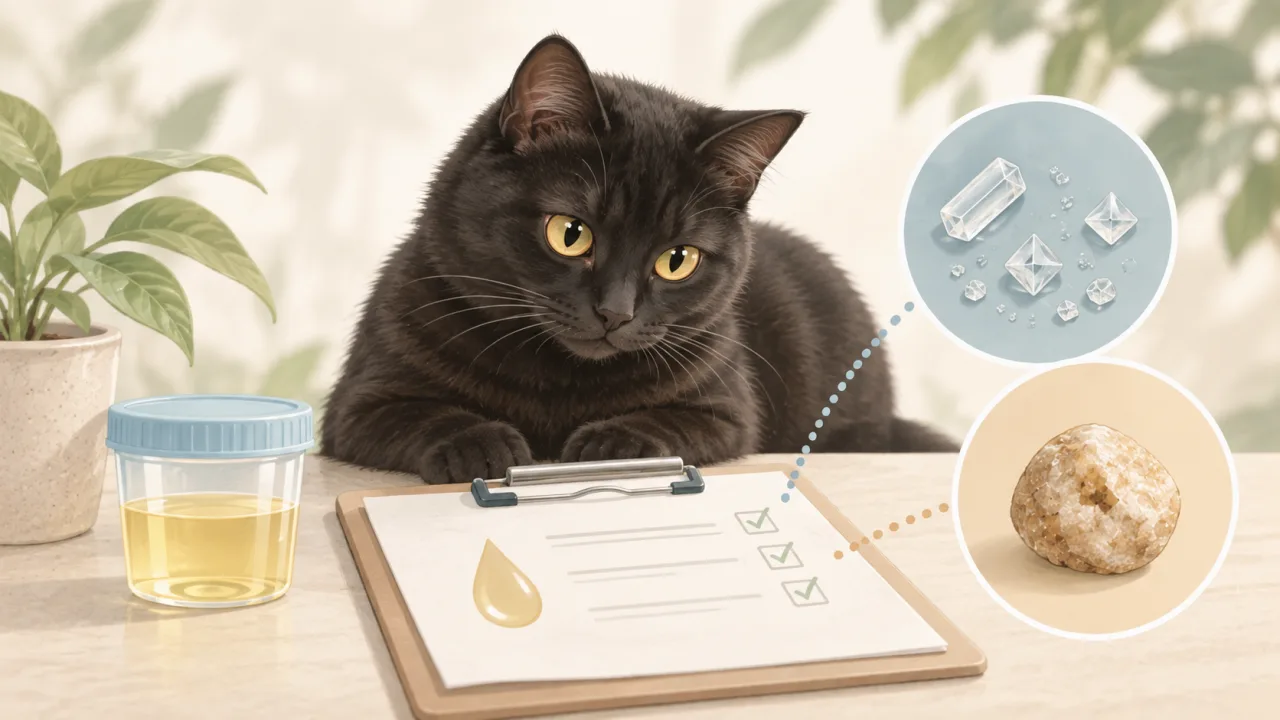
“Crystals” on a report can send you straight to a food search. But finding crystals, seeing a stone on imaging and analysing a removed stone are different levels of information.
1. Crystals do not establish a stone diagnosis
Crystals may be present without stones, and stones without crystals. Crystal type or urine pH alone cannot establish stone composition. Storage and delayed analysis can also affect crystalluria.[1] Ask whether the finding came from a urine sample or imaging, and report sample collection and storage details.
2. Record the location
Stones can occur in the kidneys, ureters, bladder or urethra.[2] This chapter focuses on the lower tract. Record location, size and number so later results can be compared. A cat unable to pass urine needs urgent care, not a trial of a different food.
3. Different stones require different questions
- Struvite: dietary dissolution may be appropriate under veterinary supervision. Ask how progress will be checked.[3]
- Calcium oxalate: existing stones cannot be dissolved with diet. Discuss whether and how removal is needed, separately from prevention.[2]
Ask whether the composition is confirmed or suspected. If a stone is removed, ask about laboratory analysis.
4. Pair the diet with a monitoring plan
Struvite dissolution requires imaging follow-up. Disappearance of visible blood does not prove that the stones are gone. Both dry and canned therapeutic formulations exist; other health conditions must be considered when choosing a diet.[3]
Write down the goal before comparing products: dissolution or recurrence management? Bring a list of treats and other foods so the team can check compatibility with the plan.
5. Keep a baseline for future comparisons
Calcium oxalate risk management can include support for dilute urine, appropriate calcium assessment and imaging surveillance.[4] Agree on an individual schedule.
Use four lines in your notes: stone location, certainty of composition, treatment goal and next review date. These are more useful starting points than a product name alone.
References and editorial note
- Minnesota Urolith Center, Being crystal clear about crystalluria
- Merck Veterinary Manual, Urinary Stones in Cats
- Minnesota Urolith Center, Feline Struvite Dissolution
- Minnesota Urolith Center (2024), Risk management for calcium oxalate
Evidence checked: 6 September 2026. CatLab educational synthesis; not an individual diagnosis or a claim of veterinary review. Decisions about tests and treatment belong with your own vet.