Feline Hepatic Lipidosis (Fatty Liver): A Starvation Emergency Where Nutrition Is the Cure
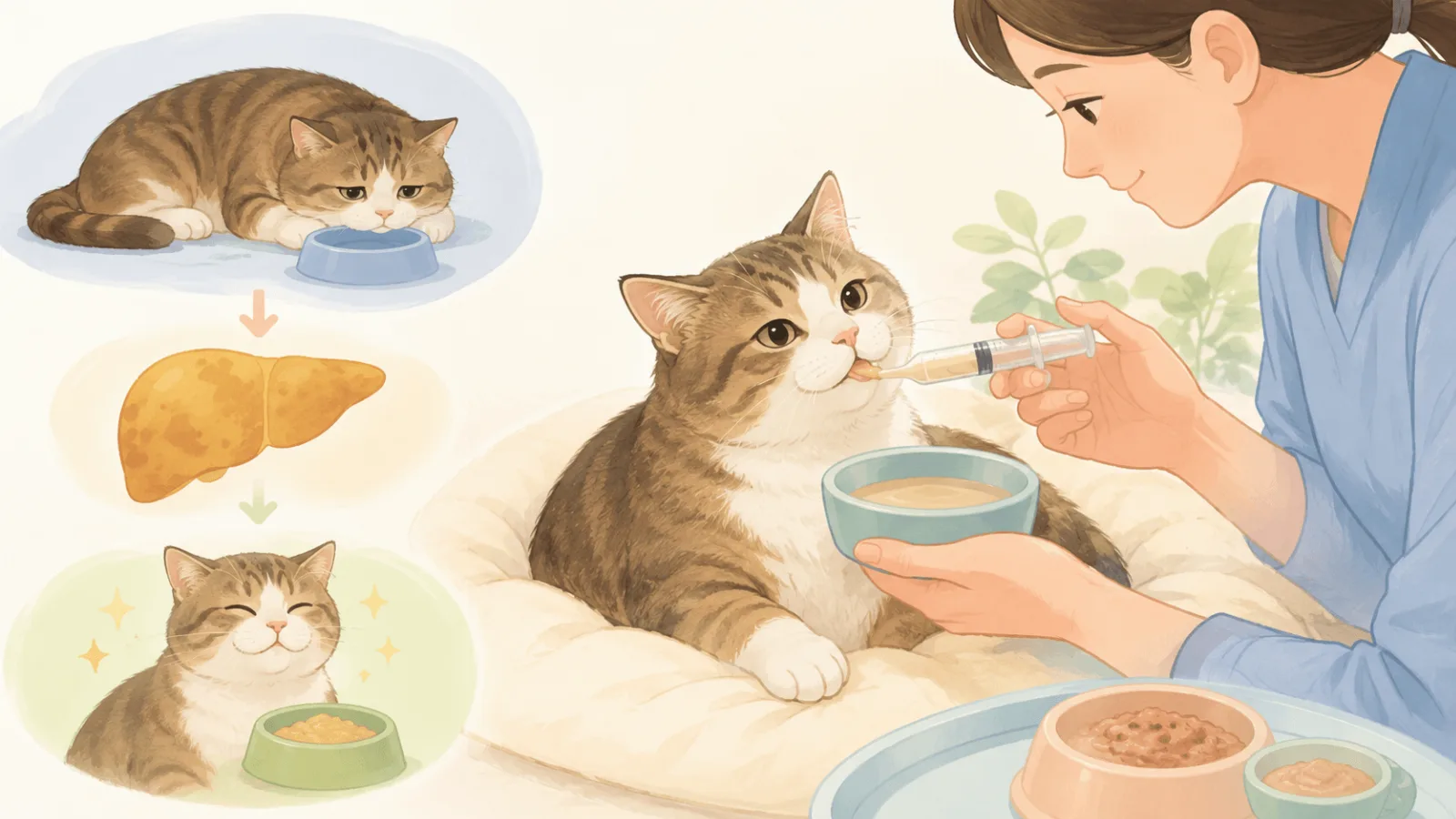
Feline hepatic lipidosis (fatty liver) is the most common liver disease in cats — and a classic emergency where "a few days of not eating" can rapidly become life-threatening. It is fundamentally a nutrition-related disease: the cause is starvation, and the core treatment is not a drug but getting enough calories back in.
1. Why it happens: starvation floods the liver with fat
Cats are obligate carnivores built for a high-protein diet. So when they can't eat and run low on energy, the body sends stored fat to the liver in bulk to burn as fuel. The problem: a cat's liver is structurally poor at processing and clearing that flood of fat.
The triglycerides that can't be processed pile up inside the liver cells, the liver swells, bile flow stalls, and it progresses to jaundice and liver failure. That is fatty liver.
The more fat there is to mobilize, the more pours into the liver. So when a chubby cat suddenly stops eating, fatty liver develops faster and more severely than in a lean cat.
Primary vs secondary
| Type | Trigger | Note |
|---|---|---|
| Primary (simple fasting) | Refusing a food change; stress from moving, boarding, a new family member; crash dieting | Occurs "because it stopped eating," with no underlying disease |
| Secondary (with underlying disease) | Appetite drops due to pancreatitis, IBD, diabetes, cancer, kidney or dental disease | Actually more common — you must also find and treat the underlying cause |
2. Warning signs: this combination means go to the vet now
- Loss of appetite + rapid weight loss: visibly thinner within days.
- Jaundice (icterus): gums, inner ears, whites of the eyes, or belly skin turning yellow — an already-advanced sign.
- Drooling / nausea: a sign of feeling sick.
- Lethargy and muscle loss: spine and hip bones becoming prominent.
- Head held down (ventroflexion of the neck): an emergency sign suggesting thiamine (vitamin B1) deficiency.
3. Diagnosis: what gets checked
| Test | Typical finding in fatty liver |
|---|---|
| ALP (alkaline phosphatase) | Markedly elevated — the hallmark finding. |
| GGT | Normal to mild. ALP high but GGT relatively low helps distinguish it from cholangitis/pancreatitis. |
| Bilirubin | Elevated (the lab basis of jaundice). |
| ALT/AST | Mild to moderate elevation. |
| Abdominal ultrasound | Enlarged, bright (hyperechoic) liver. |
| Fine-needle aspirate (FNA) cytology | Liver cells packed with fat droplets — supports the diagnosis. |
If values are ambiguous or the cause is unclear, pancreatic-specific enzymes (fPLI), cobalamin (B12), thyroid and glucose levels are checked together to rule out a secondary cause.
4. The core of treatment = nutrition
For fatty liver, "rest the liver by fasting" is exactly backwards. Since fasting is the cause, treatment is steadily putting calories and protein back in.
Feeding principles
- Do not fear a feeding tube. Force-feeding by syringe is stressful, risks aspiration, and rarely supplies enough calories. A feeding tube (nasoesophageal / esophagostomy) is the standard tool of recovery — it delivers reliable calories with less stress.
- Raise calories slowly (refeeding syndrome). Flooding a long-starved body with calories can crash blood phosphorus, potassium and magnesium. Start at a fraction of resting energy requirement (RER) and build to target over 3–4 days.
- Correct electrolytes, especially low potassium/phosphorus/magnesium, alongside fluids.
- Control nausea with antiemetics (maropitant, ondansetron) and, if needed, an appetite stimulant such as mirtazapine.
| Method | Recommendation | Note |
|---|---|---|
| Feeding tube (E-tube, etc.) | ⭐⭐⭐⭐⭐ | Reliable calories and medication with minimal stress |
| Voluntary eating | ⭐⭐⭐⭐ | Best when possible — but often can't meet requirements |
| Syringe force-feeding | ⭐⭐ | Short-term stopgap; stress/aspiration can worsen appetite |
5. Supplements to consider alongside
Nutrition is 80% of it; supplements only assist. Always use them in consultation with your vet.
- L-carnitine: supports burning fatty acids inside cells, aiding the liver's fat processing.
- B vitamins / cobalamin (B12): often deficient in inappetent, malabsorbing cats. Thiamine (B1) deficiency is directly tied to neurologic signs (ventroflexion) and matters most.
- SAMe · silymarin (milk thistle): support hepatocyte protection and antioxidation.
- Vitamin K: jaundice/bile stasis can deplete clotting factors — consider supplementing around procedures.
- Ursodeoxycholic acid (UDCA): helps bile flow when cholestasis is present. (See the related article for details.)
6. Prevention: two habits cut the risk dramatically
- Never crash-diet. Slim an obese cat slowly — about 0.5–2% of body weight per week. A starvation diet is a shortcut to fatty liver.
- 2–3 days of poor appetite = vet. Watch daily intake especially after a food change or stressful events (moving, boarding, a new family member).
Track your cat with Cat Food Lab tools
With fatty liver, catching changes in food intake and weight early is almost everything. Log daily meals and weight in the Care Diary, and use blood test analysis to watch liver values like ALP and bilirubin over time.
References
- Center SA. Feline hepatic lipidosis. Vet Clin North Am Small Anim Pract. 2005.
- Valtolina C, Favier RP. Feline Hepatic Lipidosis. Vet Clin North Am Small Anim Pract. 2017.
- Armstrong PJ, Blanchard G. Hepatic lipidosis in cats. Vet Clin North Am Small Anim Pract. 2009.