Feline Pancreatitis: Nutritional Management (2024 JAVMA / 2021 ACVIM)
Intro: from "rest the gut" to "feed the gut"
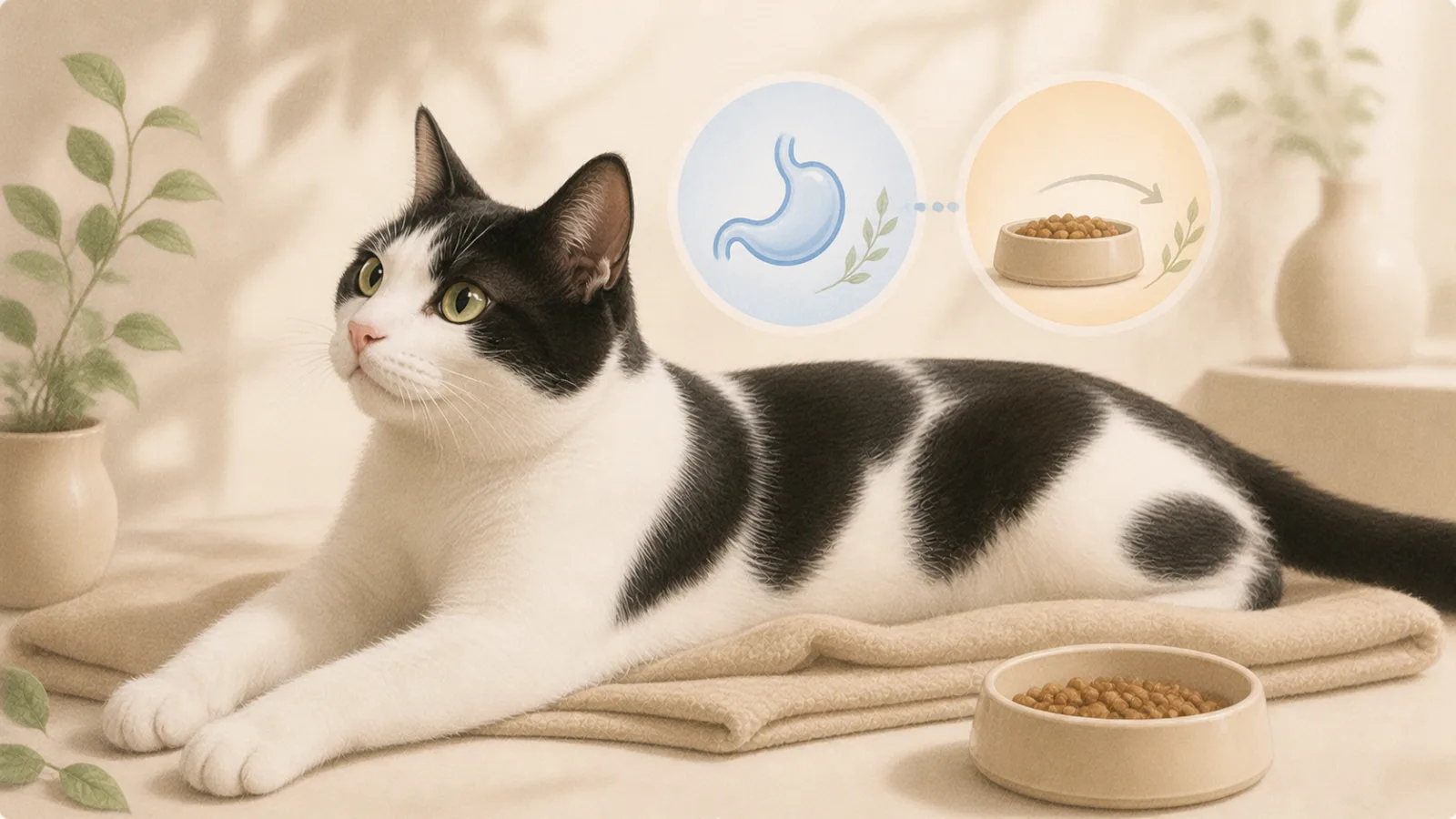
According to the latest veterinary guidance (2024 JAVMA), the core of pancreatitis management has shifted away from the old "gut rest (fasting)" theory toward early enteral nutrition (EN) — "feeding the gut."
🏛️ 2021 ACVIM consensus statement: a new definition
The 2021 ACVIM statement, produced by veterinary internal-medicine experts worldwide, offers crucial data on the prevalence and diagnosis of feline pancreatitis.
- High prevalence: necropsy studies found signs of pancreatitis in 66.1% of cats, with lesions even in 45% of apparently healthy cats.
- Hidden pain: humans feel severe pain with pancreatitis, but only 10-30% of cats outwardly show abdominal pain.
- Diagnostic difficulty: acute (recoverable) vs chronic (permanent damage) can only be distinguished microscopically — clinically it is nearly impossible.
The essentials of nutritional management
⚡ Energy (calories): preventing hepatic lipidosis
Cats are at very high risk of hepatic lipidosis even from a short fast. When energy is lacking, protein breakdown worsens — which also harms pancreatic recovery — so providing at least some nutrition is far better than not feeding at all.
🥩 Protein: the importance of hydrolyzed protein
In cats, hydrolyzed protein is known to stimulate the pancreas less than intact protein.
- Advantages: minimizes pancreatic-secretion stimulation, is easy to digest, and has low antigenicity — helpful for managing concurrent bowel disease.
- Flexibility: if your cat firmly refuses a hydrolyzed diet, focus on "eating at all" rather than insisting on a specific diet, and get nutrition in.
🥑 Fat
📘 [Latest veterinary guidance] JAVMA (June 2024)
Nutritional management of pancreatitis in dogs and cats
"Unlike in dogs, the role of fat in feline pancreatitis is not yet clearly established. Rather than an unconditional low-fat diet, decisions should consider the individual patient and any comorbidities (such as hypertriglyceridemia)."
👨⚕️ [Leading global authority] Dr. Jörg Steiner (July 2025)
※ Known worldwide as the "god of pancreatitis," and the developer of the feline pancreatic lipase (fPLI) test.
"Unlike in dogs, triglycerides (TG) are not a major factor in cats. Dogs have clear dietary fat-restriction criteria, but cats have no clear cutoff, so we take a flexible approach — only avoiding foods that are especially high in fat."
🥬 Fiber
If there is nausea or reflux, it is best to avoid viscous fiber that slows gastric emptying — but prebiotic fiber that supports gut-microbiome balance can help.
Nutrition strategy with comorbidities
| Condition | Strategy & cautions |
|---|---|
| Hypertriglyceridemia | If blood triglycerides are ≥ 600 mg/dL, dietary fat restriction is needed. Omega-3 supplementation recommended. |
| Triaditis |
A cat-specific condition where pancreatitis + cholangitis + bowel disease (CE) occur together. Cause: in cats the bile duct and pancreatic duct merge before entering the duodenum, so bacteria and inflammation spread easily. Transition gradually to a hydrolyzed diet with combined management. |
| EPI (insufficiency) | Pancreatic-enzyme replacement essential. Highly digestible diet recommended. Emphasis on vitamin B12 (cobalamin) supplementation. |
| Chronic kidney disease (CKD) | Renal diets are usually high in fat, so prioritize a low-phosphorus, hydrolyzed diet. |
| Diabetes (DM) | Use a low-carbohydrate, limited-ingredient diet. |
Assisted enteral nutrition (EN) during hospitalization
If a cat hospitalized for acute pancreatitis does not eat on its own for 3-5 days or more, active assisted nutrition is needed.
- Feeding tubes: nasogastric (NG) or nasoesophageal (NE) tubes can be placed without anesthesia and are tolerated relatively well.
- No force-feeding: forcing food by syringe risks aspiration pneumonia and food aversion, and is not recommended.
- Step-up feeding: start at 25% of the resting energy requirement (RER) and increase gradually.
Appendix 1: Nutrient-content reference for cat food (JAVMA)
Nutrient-concentration references for cat food as defined in the JAVMA guideline. Use as a reference when choosing food.
| Nutrient (per 100 kcal) | Low | Moderate | High |
|---|---|---|---|
| Fat | < 4g (<34% ME) | 4 - 6g (34-51% ME) | > 6g (>51% ME) |
| Protein | < 7g (<25% ME) | 7 - 10g (25-35% ME) | > 10g (>35% ME) |
| Crude Fiber | < 0.5g | 0.5 - 1g | > 1g |
| Total Dietary Fiber (TDF) | < 1g | 1 - 2.5g | > 2.5g |
Appendix 2: Detailed strategy by comorbidity (JAVMA S2)
When pancreatitis coexists with another disease, here are the specific feline nutrition strategies and the conflict points to manage.
| Comorbidity | Core strategy (cats) | Cautions & conflicts |
|---|---|---|
| Obesity | Low-to-moderate fat, high fiber, low calorie density, high protein | In an inappetent/fasting pancreatitis cat, too low a calorie density can be dangerous (hepatic lipidosis). |
| Chronic enteropathy (CE) | Highly digestible diet, hydrolyzed protein, novel protein, low-to-moderate fat | Strategy largely matches pancreatitis management. A hydrolyzed diet is the top recommendation for both. |
| Triaditis | Highly digestible, hydrolyzed protein, avoid high fat | Bowel disease (CE) is often the trigger, so gut-health management is essentially combined with pancreatic management. |
| EPI (insufficiency) | Highly digestible, moderate fat, avoid high fiber | Alongside enzyme replacement, keeping an easily digestible diet also helps pancreatitis recovery. |
| Diabetes (DM) | Carbohydrate restriction, high protein, ensure palatability | Possible conflict: some diabetic diets may be high in fat. If pancreatitis takes priority, adjust the protein/carb ratio within a hydrolyzed diet. |
| Kidney disease (CKD) | Phosphorus restriction, protein modulation, high energy density, omega-3, B-vitamin supplementation | Key conflict: the high fat content (energy density) of renal diets. Consider a hydrolyzed diet that is low in phosphorus yet not excessive in fat, or use home-cooked food. |
Conclusion: a guide for cat parents
In pancreatitis treatment, nutrition is not optional — it is essential. If your cat refuses the recommended food, work with your vet to feed a palatable food a little at a time, often, with a flexible approach.
🔬 Deep dive: do cats have "autoimmune pancreatitis" too?
Our analysis, synthesizing the 2021 ACVIM consensus statement and a recent 2024 JVIM letter (Penny Watson).
Human autoimmune pancreatitis is closely tied to IgG4 antibodies, but cats genetically lack this antibody class entirely. Experts note that searching for IgG4 in the feline pancreas is therefore meaningless.
2. Why immunosuppressants are still usedThough the mechanism differs, some chronic-pancreatitis cats show an "immune-mediated" response, with values stabilizing on steroids (prednisolone) or immunosuppressants. This suggests cats may have their own distinct immune-attack pathway.
※ Related paper: Watson P. Letter regarding ACVIM consensus statement (2024)