Feline Hyperthyroidism: Eating Well but Losing Weight
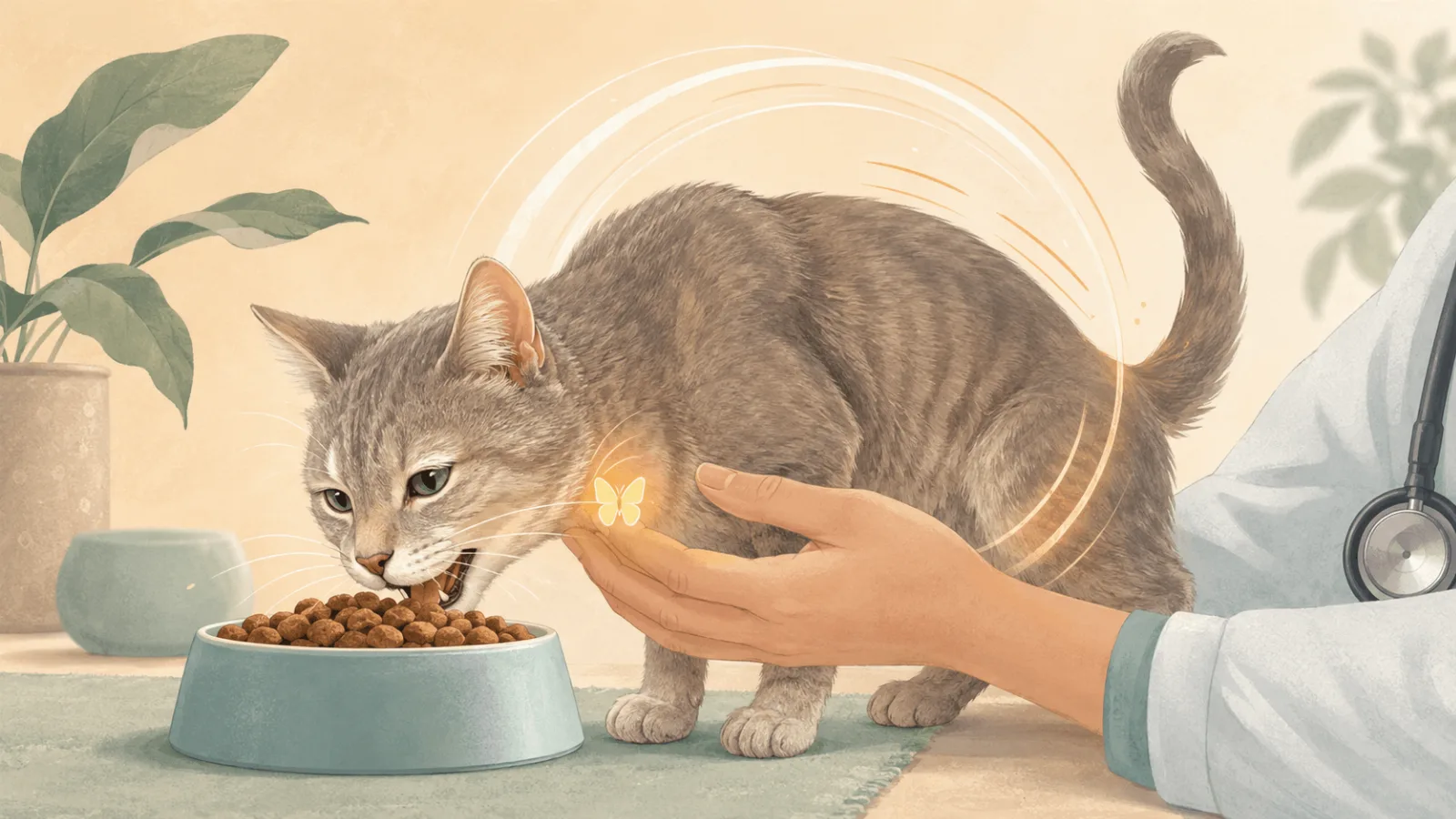
Hyperthyroidism is the most common hormonal disease of senior cats. The thyroid overproduces hormone and the whole body's metabolism gets stuck in "overdrive." The signature sign: eating well but losing weight — and because the appetite looks great, cat parents often catch it late.
1. What it is: the accelerator stuck down
Thyroid hormone is the body's accelerator pedal. In most cases a benign thyroid nodule overproduces hormone (malignancy is rare): the heart races, energy burns nonstop, and muscle and fat waste away. Left alone, it leads to heart thickening (tachycardia-induced cardiomyopathy), hypertension, and rapid muscle loss.
2. Signs: test when you see this combination
- Ravenous appetite with weight loss — the classic. (A minority show the opposite, poor-appetite form)
- Increased thirst and urination (overlaps with diabetes and kidney disease)
- Hyperactivity, restlessness, more vocalizing: a senior cat yowling at night, or suddenly irritable/aggressive
- More vomiting/diarrhea, an unkempt greasy coat
- Fast heart rate: your vet may note a murmur or tachycardia
3. Diagnosis: it starts with one blood value
| Test | What it tells you |
|---|---|
| Total T4 | First-line screening — worth including in senior checkups. |
| free T4 (equilibrium dialysis) | Backup when T4 is borderline, or with concurrent illness. |
| Kidney values (Cre/SDMA), blood pressure, heart | Must be evaluated together to choose treatment — see section 6. |
4. Treatment: four options, each with trade-offs
| Option | Nature | Pros | Considerations |
|---|---|---|---|
| Methimazole (medication) | Suppresses hormone production | Easy to start, adjustable, reversible | Lifelong dosing 1–2×/day, regular blood tests, side effects in some (vomiting, itching) |
| Radioactive iodine (I-131) | Curative | High cure rate with one treatment, no more pills | Limited facilities, isolation stay, cost, kidney evaluation required first |
| Iodine-restricted diet (e.g., y/d) | Dietary management | An option when pilling is impossible | Requires 100% exclusive feeding — one treat breaks it. Details below |
| Surgery (thyroidectomy) | Curative | Definitive removal | Anesthesia risk; largely replaced by I-131 nowadays |
5. Nutrition: think of feeding in two phases
🔥 Before/until control: fuel the burning body
- With metabolism in overdrive, calorie needs are sharply increased. Until hormone levels are controlled, feed calorie-dense, high-protein food to defend weight and muscle.
- Preserving muscle (lean body mass) drives prognosis — senior cats lose muscle anyway, and this disease accelerates it. Provide plenty of quality animal protein.
🧂 If you choose the iodine-restricted diet: the rules are everything
- Exclusive feeding, strictly: the diet works by cutting off the raw material (iodine) the thyroid needs. A single treat or a few kibbles of another food defeats the principle.
- Multi-cat homes, beware: stealing another cat's food voids it — and healthy cats should not eat an iodine-restricted diet long-term either. You will need separated feeding.
- Know its limits: it lowers the numbers but does not treat the nodule itself, and long-term data are more limited than for medication or I-131. Fairly viewed, it is the fallback for cats that truly cannot be medicated.
❤️ Heart and blood pressure
- Longstanding hyperthyroidism thickens the heart muscle into an HCM-like state. If heart changes were found, the basics are avoiding sodium excess and ensuring ample taurine.
6. The twist after treatment: hidden kidneys revealed
The hyperthyroid state boosts blood flow to the kidneys, masking kidney values and making them look better than they are. When treatment normalizes the hormone, creatinine often rises and hidden chronic kidney disease (CKD) is unmasked — a common scenario.
- Kidney evaluation before treatment + recheck after is a mandatory part of the course (and a key reason vets often start with reversible methimazole to "test the response" first).
- If CKD is confirmed, the dietary focus shifts from calorie defense to phosphorus control — continue with our CKD column.
- Once treatment works and metabolism "slows back down," watch for the opposite problem: weight gain. Keep feeding pre-treatment amounts and the weight piles on — readjust calories against the weight trend.
Let the app draw that weight graph for you
The report card for hyperthyroidism is the weight trend. Log weight and meals in the Care Diary and the changes chart themselves — and use blood test analysis to track T4 and kidney values over time.
References
- Carney HC, et al. 2016 AAFP Guidelines for the Management of Feline Hyperthyroidism. J Feline Med Surg. 2016.
- Peterson ME. Feline hyperthyroidism: an animal model for toxic nodular goiter. J Endocrinol. 2014.
- van der Kooij M, et al. Effects of an iodine-restricted food on client-owned cats with hyperthyroidism. J Feline Med Surg. 2014.
- Williams TL, et al. Association of iatrogenic hypothyroidism with azotemia and reduced survival time in cats treated for hyperthyroidism. JVIM. 2010.