SAMe Fact-Check: The Antioxidant Shield for Liver Cells
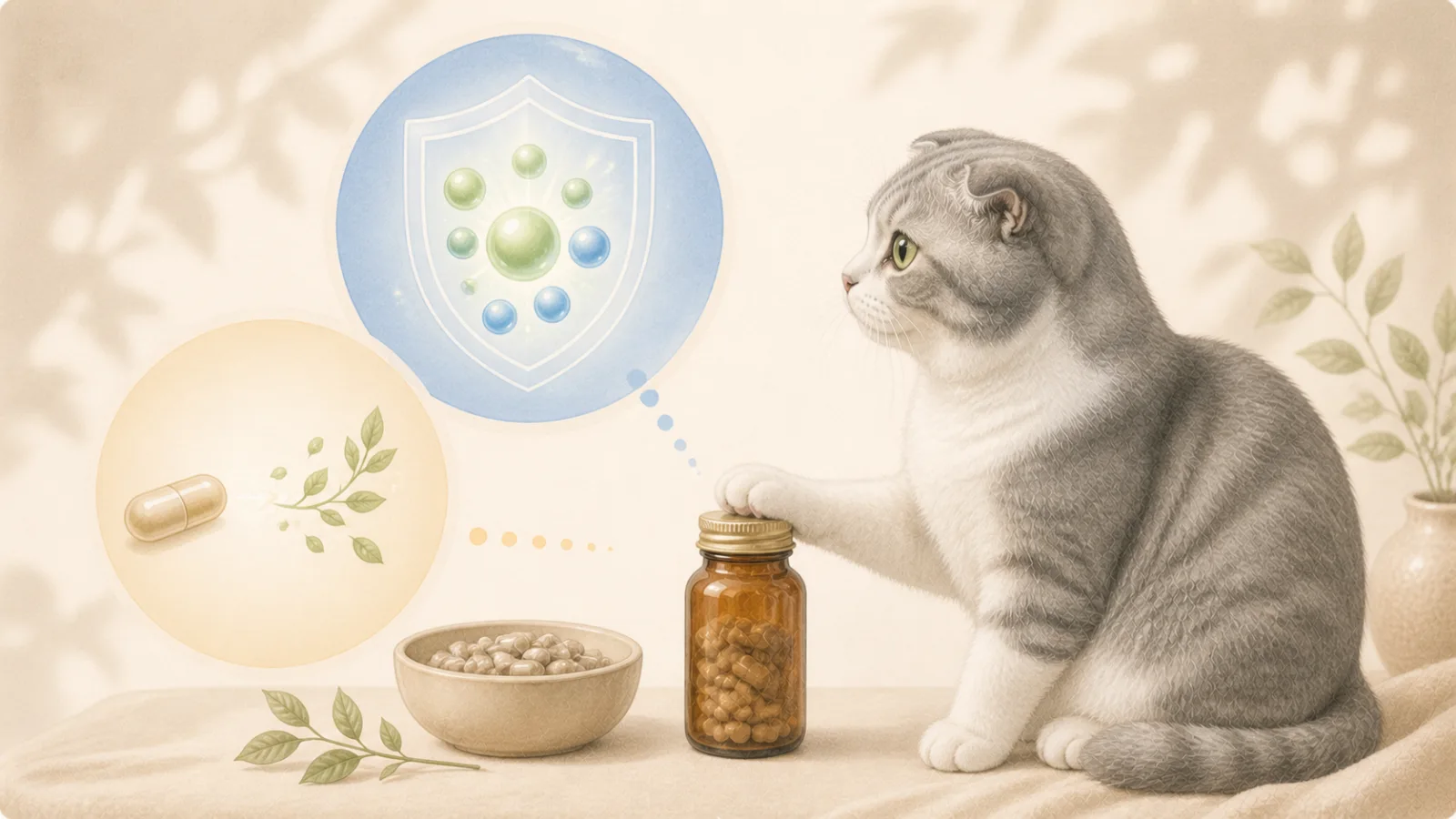
🧬 SAMe: an antioxidant shield that protects liver cells from within
SAMe (S-adenosylmethionine) is one of the most widely used supplements in feline liver disease. Its key role is serving as the raw material for glutathione, the liver's main antioxidant. Glutathione is the first thing depleted when the liver is stressed, and SAMe replenishes it to protect liver cells from oxidative stress.
1. Purpose & mechanism
✅ Main indications (cats)
- Hepatic lipidosis (fatty liver): the flagship indication — protects oxidatively stressed liver cells and aids recovery.
- Cholangitis / cholangiohepatitis: for antioxidant and cytoprotective support in the biliary inflammation common in cats.
- Chronic hepatitis: adjunct to slow progression of long-standing liver inflammation.
- Steroid/drug-induced liver injury: protection when long-term medication strains the liver.
- Senior cognitive support: SAMe is involved in brain methylation and neurotransmission, and is also used for cognitive support in some senior cats.
🧬 How it works
- Glutathione supply: SAMe feeds the cysteine pathway to make glutathione, restoring the liver's core antioxidant defense.
- Membrane stabilization: phospholipid methylation maintains liver-cell membrane fluidity and function.
- Bile-flow support: indirectly aids bile excretion during cholestasis.
| Condition | Rating | Note |
|---|---|---|
| Hepatic lipidosis | ⭐⭐⭐⭐⭐ | Flagship antioxidant/cytoprotective use |
| Cholangitis / cholangiohepatitis | ⭐⭐⭐⭐ | Synergy when combined with UDCA |
| Chronic hepatitis | ⭐⭐⭐ | Long-term management |
| Drug-induced liver injury | ⭐⭐⭐ | Eases burden from steroids/antibiotics |
2. Purity & product comparison
SAMe is a very unstable molecule, so it is made as a stabilized salt (tosylate, disulfate, etc.). Stabilization and purity are what set product quality apart.
- Single agent: SAMe only — free dose adjustment.
- Combination (SAMe + silybin): products pairing milk-thistle silybin are widely used for pets (e.g., Denamarin-type). Two liver-protection pathways in one tablet.
3. Excipients & additives
- Enteric coating is essential: SAMe is destroyed by stomach acid, so it must be coated to dissolve in the intestine to be absorbed. This coating is the most important part of the formulation.
- Palatability additives: unlike human versions, some pet products add flavoring — check the actual SAMe content ratio.
4. Form & stability
- Form: enteric-coated tablets are standard.
- Never split or crush: breaking the enteric coating exposes SAMe to stomach acid and essentially destroys its effect. Always give it whole.
- Storage: highly sensitive to light and moisture. Open the individual blister right before dosing; do not decant into a pill box in advance.
5. Dosing guide (per kg)
| Level | Dose (mg/kg/day) | Situation |
|---|---|---|
| General care | ~18 - 20 | Commonly cited range for most liver support |
| Severe / intensive | Vet-directed | Severe hepatobiliary disease may go higher |
※ Tablets come in fixed strengths (90/225/425mg, etc.), so you convert to "how many tablets" by body weight. Confirm the exact dose with your vet.
6. Side effects & cautions
- Generally safe: SAMe rarely causes side effects and is considered relatively safe long-term.
- Rare GI upset: vomiting or reduced appetite in a few cases.
- Combination caution: theoretical caution with serotonergic drugs (e.g., antidepressants) — tell your vet about current medications.
7. Metabolism & half-life
- Metabolism: actively metabolized in the liver after absorption, serving as the starting point for several pathways (methylation, transsulfuration).
- Half-life: relatively short, so once daily at a consistent time is recommended for steady levels.
8. How to give it: ⚠️ on an empty stomach!
If you use UDCA (with food) and SAMe (empty stomach) together, you must separate the timings — set a schedule so they don't get mixed up.
9. Rest periods & time to effect
- Rest periods: a supplement that can be given long-term. Once values stabilize, decide on tapering/stopping with your vet.
- Onset: cumulative rather than immediate. Response usually begins at 1-2 weeks, and 4-8 weeks of consistent use is needed for meaningful changes in liver values.
10. Supplements that pair well
- UDCA: bile-flow improvement + hepatocyte antioxidation — different pathways, strong synergy.
- Silymarin (milk thistle): complements antioxidant/anti-inflammatory action; SAMe+silybin combos are common.
- NAC / vitamin E: reinforce antioxidant pathways together.
- B vitamins: keep SAMe's methylation cycle running smoothly.
Confirm the effect with data
Supplement effects vary by individual. Use blood test analysis to compare liver values (ALT, ALP, bilirubin) before and after SAMe, and log consistently in the Care Diary to see whether it suits your cat.
References
- Center SA, et al. The effects of S-adenosylmethionine on clinical pathology and redox potential in cats. JVIM. 2005.
- Webster CRL, Cooper J. Therapeutic use of cytoprotective agents in canine and feline hepatobiliary disease. Vet Clin North Am Small Anim Pract. 2009.