Cat Probiotics: When Do They Actually Work? — A Fact-Check
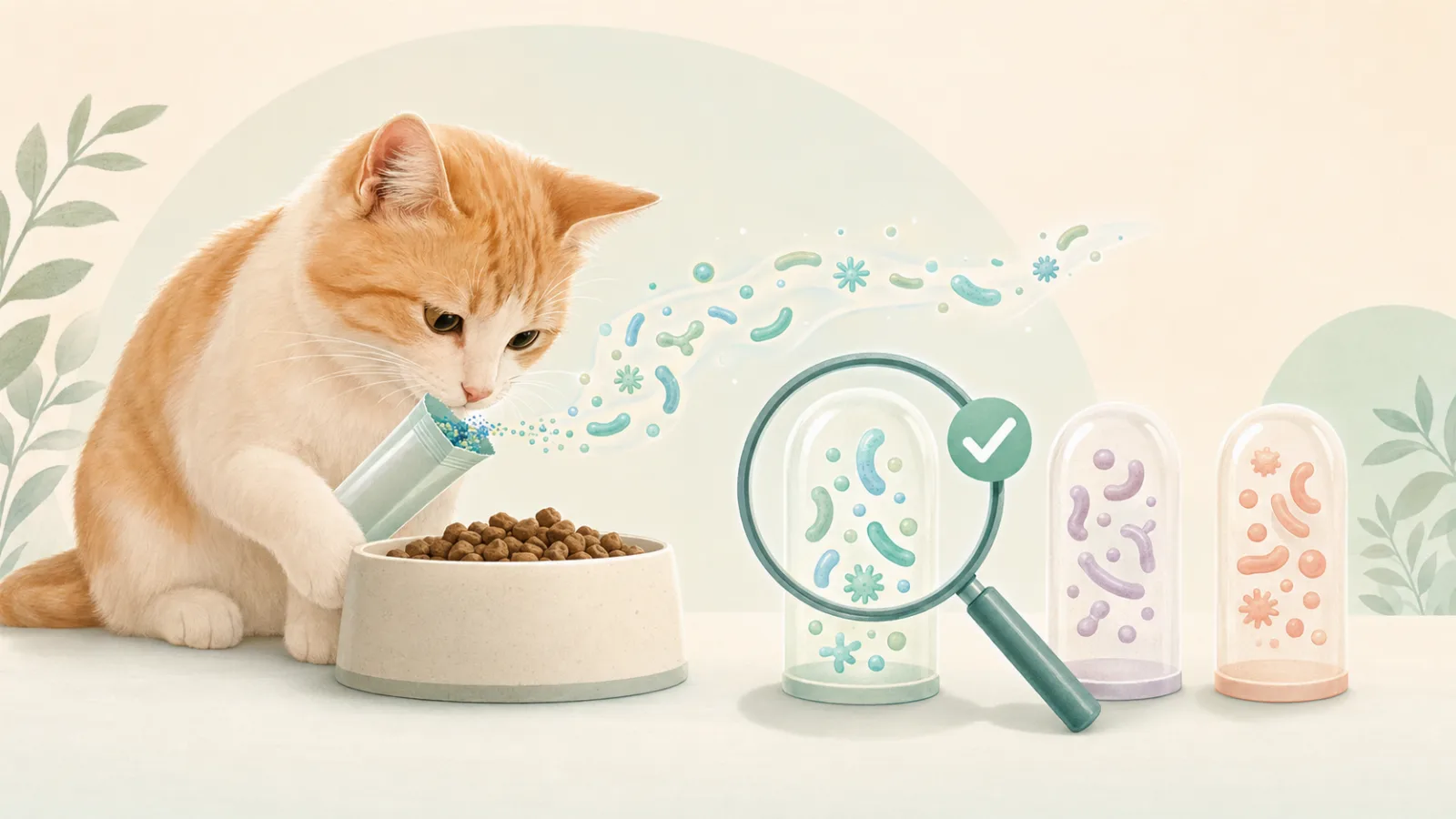
"Give probiotics for diarrhea" is half true, half wrong. For cat probiotics, everything comes down to when and which strain — yet most sales pages skip that distinction. This fact-check separates the situations with real evidence from those without, and covers how to choose a product.
1. What probiotics are
The gut hosts a balance of countless bacteria (the microbiome). Diarrhea, antibiotics or stress can upset that balance, shaking digestion and immunity. Probiotics add live beneficial bacteria to restore it. The key point: not all "probiotics" are the same.
2. Where evidence exists — genuinely helpful here
In these situations, specific strains are backed by studies.
- Acute diarrhea: for sudden loose stool, certain strains (notably Enterococcus faecium SF68) have been shown to speed recovery, including in shelter and multi-cat settings.
- Antibiotic-associated diarrhea: when antibiotics wipe out good bacteria too, adding probiotics can help. (Give them about 2 hours apart from the antibiotic.)
- Stress-related gut upset: worth trying for temporary loose stool from moving, hospitalization or environmental change.
3. Overhyped uses — not a cure-all
- Chronic enteropathy (IBD) / chronic diarrhea: probiotics may support but are not a standalone treatment. Diagnosis and diet/medication come first. See the IBD guide.
- "Gut seems off, so give it forever as prevention": evidence for long-term daily use in a healthy cat is weak. Use it when needed.
- "Improves immunity, skin and coat too": closer to marketing. Keep expectations focused on the digestive tract.
4. Strain and CFU are everything
Even under the same word "probiotic," effect depends entirely on which strain and how many (CFU).
- Named strain: choose products that list a specific strain (e.g., Enterococcus faecium SF68, Bifidobacterium), not just "contains probiotics." Research is done on specific strains.
- CFU count: what matters is how many reach the gut alive. Products that state CFU are more trustworthy.
- Viability & storage: they must be alive to matter. Some need refrigeration, and past the expiry the bacteria die and the effect disappears. (Many low-quality products fall short of their labeled CFU — which is exactly why strain/CFU labeling matters.)
5. Choosing one — why human/yogurt products fall short
- Use cat-specific products. Human strains don't colonize the feline gut well. A pet-specific product with strains validated in cats is better.
- Skip yogurt. Adult cats are often lactose intolerant, so it can actually cause loose stool, and its bacterial counts fall short of therapeutic levels.
- Single/validated strain + stated CFU + unflavored/no additives is a reliable checklist.
6. Prebiotics & synbiotics
Prebiotics are food for the good bacteria (inulin, FOS, psyllium); a product combining bacteria and their food is a synbiotic. Feeding the bacteria along with adding them may aid colonization — worth noting if a product includes both.
Judge it by the stool
Whether a probiotic is working shows up most clearly if you log stool (consistency, frequency) for a few days. And the foundation is a well-digested food — start by checking your cat's diet.
7. Skip the probiotic, see a vet — these signs
- Diarrhea lasting more than 2–3 days or getting worse
- Bloody or black stool, vomiting, weight loss, lethargy
- Diarrhea in a kitten, senior, or cat with a chronic condition (dehydration comes fast)
References
- Bybee SN, et al. Effect of Enterococcus faecium SF68 on presence of diarrhea in shelter cats. J Vet Intern Med. 2011.
- Torres-Henderson C, et al. Effect of Enterococcus faecium SF68 on gastrointestinal signs in cats. Top Companion Anim Med. 2017.
- WSAVA Global Nutrition Guidelines — supplements and gut health.