Omega-3 (EPA/DHA): The Complete Cat Guide
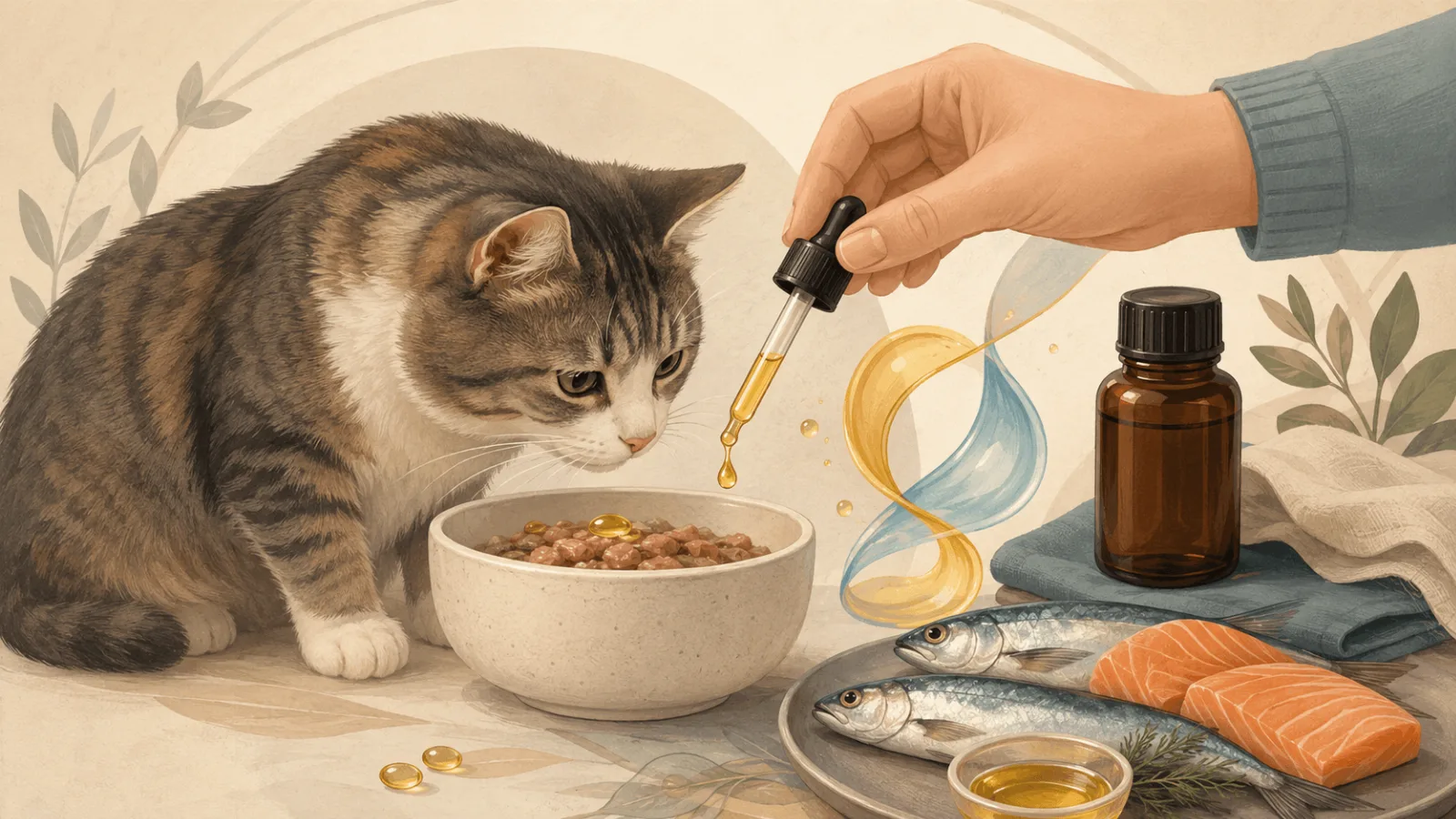
Omega-3 (EPA·DHA) is the most widely used cat supplement — and also the one most often bought wrong. "Omega-3 is omega-3, right?" simply does not hold here. This guide covers why you give it, how to choose it, and how to store it.
1. Why give it: the roles of EPA and DHA
For cats, the omega-3s that matter are essentially EPA and DHA. They do slightly different jobs.
- EPA: the anti-inflammatory workhorse. It is what we lean on for slowing kidney disease (CKD), arthritis, skin inflammation and heart care.
- DHA: a building block of brain, nerve and retina. Especially important for kitten development and senior cognitive support.
2. Omega-3 : Omega-6 ratio — just get the basics
Omega-6 (mainly linoleic and arachidonic acid) is also an essential fatty acid — it is not the enemy. The issue is balance. Modern pet diets skew heavily toward omega-6 (grains, vegetable oils), and omega-6 tends to push toward inflammation while omega-3 (EPA) pushes toward resolving it.
- So the goal is not "eliminate omega-6" but add omega-3 to tip a lopsided seesaw back.
- People often cite 5:1 to 10:1 (omega-6:omega-3) as ideal — but honestly, do not obsess over this "golden ratio." In practice the type (EPA/DHA) and absolute amount of omega-3 matter more, and it varies by individual and disease.
- Bottom line: most commercial food already has plenty (or excess) omega-6, so what you usually control is how much EPA/DHA you add. Supplementing quality EPA/DHA at a sensible amount beats agonizing over ratios.
3. Why plant omega-3 (flax, perilla, etc.) does not work for cats
Plant omega-3 — flaxseed, perilla, chia — is a form called ALA. ALA only works after the body converts it to EPA/DHA, and that is the catch.
That does not mean ALA is useless. ALA is itself an essential fatty acid — apart from conversion, it serves as an energy source, skin-barrier component and cell-membrane building block, and plays a role in mild anti-inflammatory pathways. A balanced diet does need some ALA. The point is the order of roles: ALA is a "nice-to-have baseline in the diet," while EPA/DHA is the "main event you must supply separately from fish." Just do not try to replace your cat's EPA/DHA with a spoon of flaxseed oil.
4. Forms: TG · rTG · EE, and krill oil
Even the same "fish oil" differs by the chemical form the fatty acids are attached in. Simply put:
| Form | In plain terms | Notes |
|---|---|---|
| TG (natural triglyceride) | Fish oil in its natural form | Absorbs well; but hard to concentrate, so potency is lower. |
| EE (ethyl ester) | Bound to alcohol to concentrate it | Highly concentrated and cheap; relatively lower absorption and more prone to rancidity. |
| rTG (re-esterified triglyceride) | Concentrated as EE, then converted back to TG | High potency + good absorption; more processing, higher price. Usually the top pick. |
| Krill oil | Phospholipid-bound oil from krill | Phospholipid form absorbs/stays stable well, with astaxanthin (antioxidant). But absolute EPA/DHA is low, so weigh efficiency per dose. |
5. Raw-material makers: honestly, half the game
More than the finished brand, who made the oil inside largely determines quality. There are globally trusted refiners, and good products proudly state the source. Notably:
- Epax (Norway): famous for high-purity, high-concentration rTG oil; common in premium pet/human products.
- Croda / Incromega (UK): long-established marine-lipid refining.
- KD Pharma (Germany): ultra-concentrated EPA/DHA.
- Aker BioMarine (Norway): the leading krill-oil source (Superba).
6. ⚠️ Caution: omega-3 with added vitamin D
Many human omega-3 products include vitamin D (sometimes A and E too). Those amounts are set for humans — a completely different story for a small cat.
7. Storage and rancidity: even good oil turns toxic when it spoils
Omega-3 oxidizes (goes rancid) very easily. Rancid oil is not just ineffective — it can increase oxidative stress and actually harm. Protecting the oil matters as much as buying a good one.
- Light, air, heat are the three enemies: cap it tightly, keep it out of direct sun, and refrigerate after opening.
- Small bottles beat one big tub: cats eat only a little, so a large bottle goes rancid before it is finished. Use small volumes quickly.
- Smell check: fresh fish oil is only faintly fishy. A sharp, strong fishy or sour smell means rancid — toss it even if it feels wasteful.
- Self-test: home test strips can gauge an oil's rancidity — handy if you rotate several bottles or use large volumes. See rancidity test strips (Coupang Partners link — a small commission may support operations.)
8. EPA+DHA dose calculator by weight
Because concentrations vary so much, think in mg of EPA+DHA per day, not "how many capsules." The calculator below multiplies body weight by reference ranges cited in published veterinary-nutrition literature (mg of EPA+DHA per kg) to show a rough daily target.
9. Dosing sense (for reference)
Concentrations vary wildly between products, so think in mg of EPA+DHA, not "how many capsules." It varies greatly by disease, weight and goal (skin vs kidney vs joints), so just get a feel here.
- A small maintenance dose and a therapeutic high dose (kidney, joints) differ by an order of magnitude.
- High-dose EPA/DHA can affect clotting and wound healing, so if surgery is planned or anticoagulation is involved, set the dose with your vet.
Check whether omega-3 is actually working for your cat
Supplement effects vary by individual. Log dosing in the Care Diary and use blood test analysis to compare values (inflammation, kidney, lipids) before and after supplementing. Data is the fastest way to know if it truly suits your cat.
References
- Bauer JE. Therapeutic use of fish oils in companion animals. J Am Vet Med Assoc. 2011.
- Plantinga EA, et al. Retrospective study of the survival of cats with acquired chronic renal insufficiency offered different commercial diets. Vet Rec. 2005.
- NRC. Nutrient Requirements of Dogs and Cats. 2006. (essential fatty acids and ALA conversion)