Feline Nutrition: Protein — How Much Your Cat Really Needs
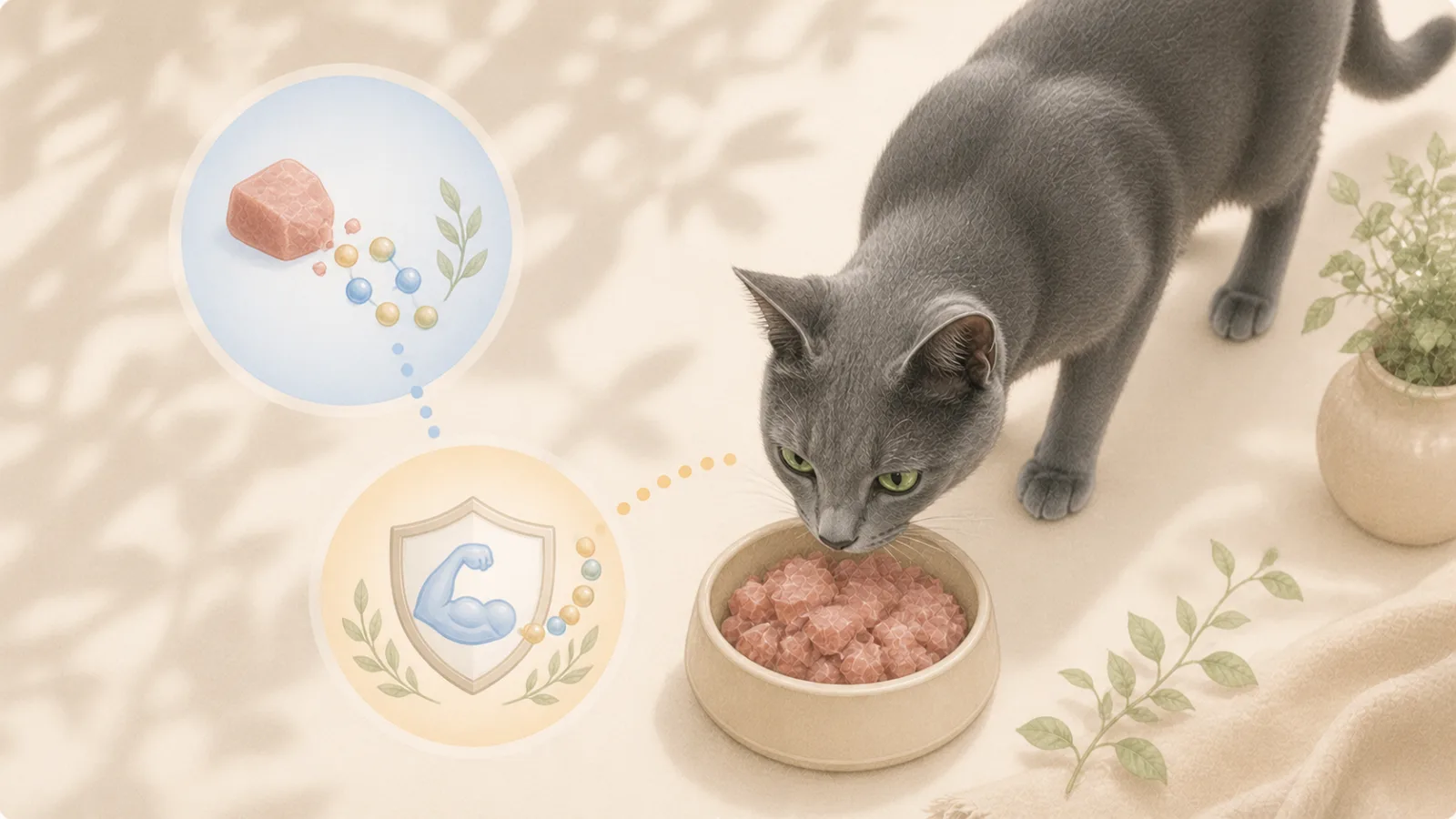
1. Cats and protein: the survival strategy of a "true carnivore"
Cats are obligate carnivores. Unlike omnivores, a cat's liver keeps the enzymes for breaking down protein into energy permanently switched on — a constant state of gluconeogenesis.
2. Digestion & absorption: from mouth to litter box
More important than how much protein a cat eats is how efficiently it is absorbed.
- Digestibility: the proportion of ingested protein that is absorbed into the body rather than excreted in feces. Fresh lean meat is highly digestible, while heavily processed by-products are less so.
- Biological Value (BV): the proportion of absorbed protein actually used to build body tissue. Egg (100) is the reference, and meat generally has a higher BV than plant sources.
3. Nutrition standards: beyond survival, toward health
Where the older NRC standard focused on "the level at which no deficiency signs appear," the newer FEDIAF guideline focuses on the "healthy maintenance" of cats living in real homes.
| Standard | Value (per 1,000 kcal) | Notes |
|---|---|---|
| NRC (2006) MR | 40g | Absolute minimum for life (deficiency prevention) |
| NRC (2006) RA | 50g | Academic recommended allowance including a safety margin |
| FEDIAF (latest) | 83.3g | Practical recommendation for the average pet cat |
| CVMA SUL | DM 55% | Safe upper limit proposed by the Canadian VMA (dry-food basis) |
4. Latest research: protein for preserving lean body mass (LBM)
Recent research recommends that an adult cat consume at least 5.2g of protein per kg of body weight to maintain muscle (lean body mass) without loss.
✨ Worked example (a 4kg cat eating 250kcal/day)
- By research: 4kg × 5.2g = 20.8g
- By FEDIAF: 250kcal ÷ 1000 × 83.3g = 20.82g
You can see the two standards almost coincide — so at least 20g of protein per day is recommended.
📊 Daily protein calculator (minimum to preserve lean mass)
Enter your cat's current weight to see the protein needed to maintain muscle.
5. The "quality" and "clarity" of protein ingredients
Rather than marketing terms like "grade," judge quality by the ingredient names on the label.
| Type | Description |
|---|---|
| Meat (named) | Named cut such as chicken or salmon. The best amino-acid profile. |
| Meal | A powdered form with moisture removed. High protein concentration, but quality varies with heat processing. |
| By-product | Organs, blood, etc. Nutritious, but digestibility varies widely. |
6. Amino acids: the bricks of protein
Protein is a chain of amino acids. Cats have 11 essential amino acids they cannot synthesize in the body.
7. Strategy by life stage & disease
The amount and quality of protein should be adjusted to the cat's health status.
| Condition | Protein strategy | Reason |
|---|---|---|
| Growth / pregnancy | Very high | Essential for explosive tissue formation and growth |
| Senior cats | High-quality, high protein | Prevents reduced digestibility and muscle loss (sarcopenia) |
| Kidney disease (CKD) | Manage quality | Reduce nitrogenous waste while supplying quality protein to maintain muscle |
| IBD / pancreatitis | Hydrolyzed protein | Use a finely broken-down form to minimize the immune response |
8. By-products of protein metabolism: BUN and phosphorus (P)
BUN (blood urea nitrogen), produced after protein metabolism, is excreted through the kidneys. Meat protein generally contains phosphorus.
9. Latest research & trends
- Plant protein: amino-acid imbalance and lower digestibility versus meat remain topics of debate.
- Insect protein: as a low-allergen ingredient, it is drawing attention as an alternative for cats with dietary sensitivities such as IBD.