Feline IBD & Chronic Enteropathy: The Cobalamin (B12) Key
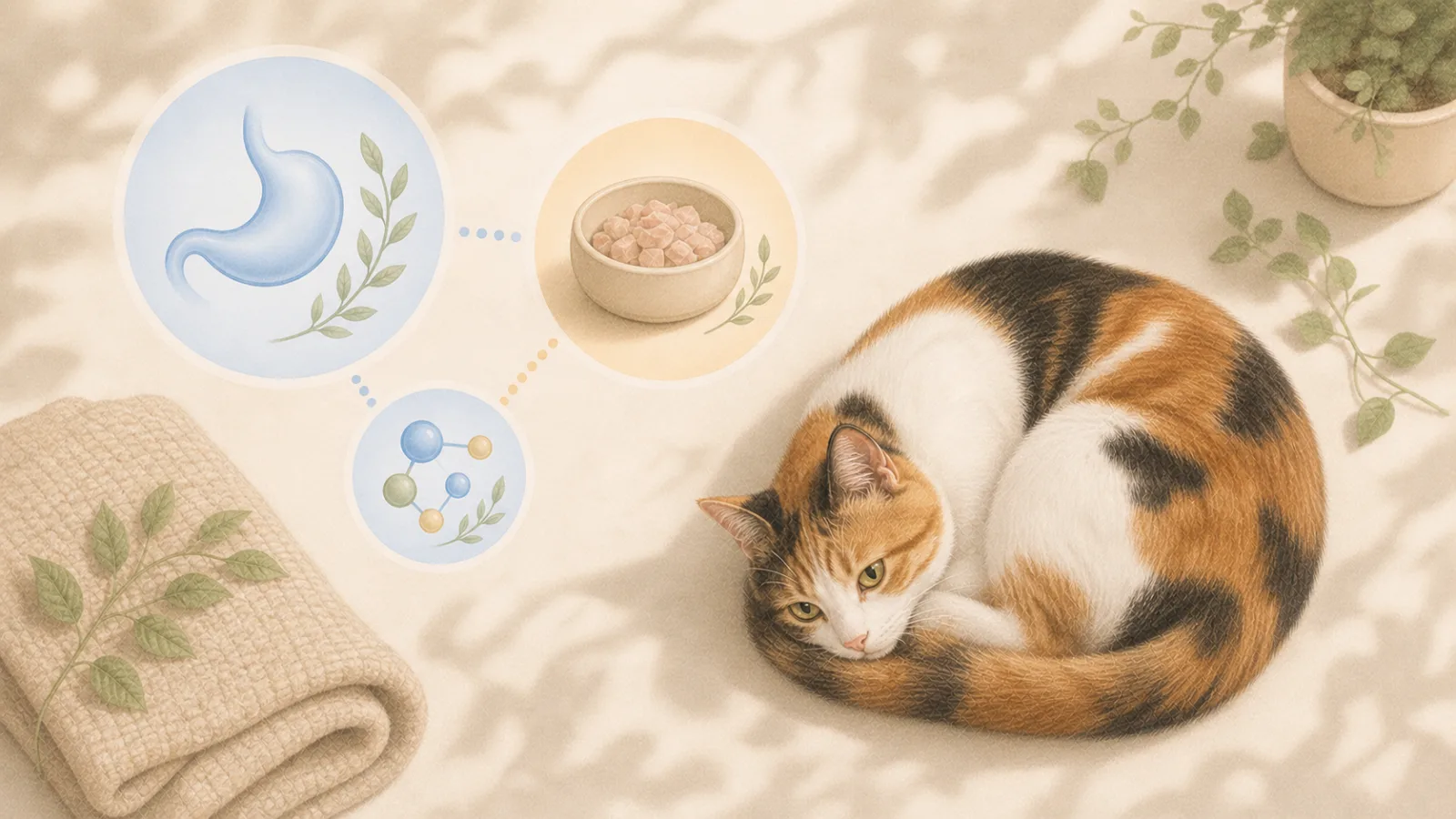
A guide to conquering chronic enteropathy (CE) and IBD
Veterinary medicine now defines a cat's chronic vomiting, diarrhea, and poor appetite not as simple enteritis but under the umbrella term chronic enteropathy (CE).
1. The 3-stage standard of IBD treatment (response-based classification)
According to research by leaders in the field such as Kenneth Simpson and Albert Jergens, CE is classified by treatment response as follows.
| Stage | Formal name | Core strategy | Notes |
|---|---|---|---|
| Stage 1 | Food-responsive (FRE) | Limited-ingredient (LID), hydrolyzed diet | About 60-70% of feline CE cases resolve at this stage. |
| Stage 2 | Antibiotic-responsive (ARE) | Tylosin, metronidazole | Resolves gut dysbiosis. Recently the trend is to replace these with probiotics. |
| Stage 3 | Immunosuppressant-responsive (SRE) | Prednisolone, budesonide | The stage truly called "IBD." Forcibly suppresses autoimmune inflammation. |
2. [Deep dive] Why did mirtazapine fail while B12 succeeded? (the science)
As Ari's case showed, what reversed a situation where the appetite stimulant was not working was cobalamin (B12). There is a clear physiological reason.
① The link between omeprazole and B12 absorption
For B12 to separate from protein in a cat's stomach, strong stomach acid (HCl) is essential. But taking omeprazole (an acid suppressant) long-term for IBD management or gastritis prevention raises the stomach pH, making B12 separation impossible. In other words, even eating good food, the cat falls into a state of "nutritional impotence" where not a single drop is absorbed into the body.
② The cellular energy pathway: a stalled TCA cycle
Vitamin B12 is a coenzyme that converts methylmalonyl-CoA into succinyl-CoA inside the mitochondria, the cell's energy factory. Without B12, the energy-production cycle halts.
③ The miracle of passive diffusion
In an IBD cat, the gut region that absorbs B12 (the ileum) is damaged. But when an ultra-high oral dose of 500 mcg or more is given, even with the absorption mechanism broken, about 1% is forced into the bloodstream via passive diffusion driven by the concentration gradient. This "forced supply" is what woke up Ari's cells.
3. Recommended diet & supplement guide for IBD
🍲 Dietary management
- Novel protein (LID): choose proteins the cat has not encountered before — like the duck, rabbit, or horse meat Ari eats — to avoid immune-system attack.
- Hydrolyzed diet: protein particles are broken very small so immune cells cannot recognize them as an enemy.
- Digestibility: IBD cats spend a lot of digestive energy, so a highly digestible diet (over 90%) is essential.
💊 Key supplements
- Cobalamin (B12) & folate (B9): over 75% of IBD cats are deficient. A dedicated supplement like Cobalaplex is essential.
- Omega-3 (EPA/DHA): naturally eases gut-wall inflammation.
- Probiotics: replenishing beneficial bacteria helps a cat pass the "ARE (antibiotic-responsive)" stage naturally (e.g., S. boulardii).
- Digestive enzymes: pancreatic-enzyme supplementation immediately reduces the digestive burden in cats with upper IBD.
4. Latest research links & references for the commander
Academic data for cat parents who want to study deeper:
- WSAVA Liver & Gastrointestinal Guidelines (chronic enteropathy guidelines)
- Gastrointestinal Laboratory - Cobalamin information (feline cobalamin deficiency & GI disease research - Texas A&M)
- ISFM IBD care guide: Feline Chronic Enteropathy
🏁 A final word (archive conclusion)
"Treatment is not about following a manual, but about responding to your cat's data. Ari's appetite returned as a victory of 'precision nutrition' — understanding drug-to-drug interactions and delivering the missing supply (B12) at the right moment."