A night with no urine — the signs that cannot wait
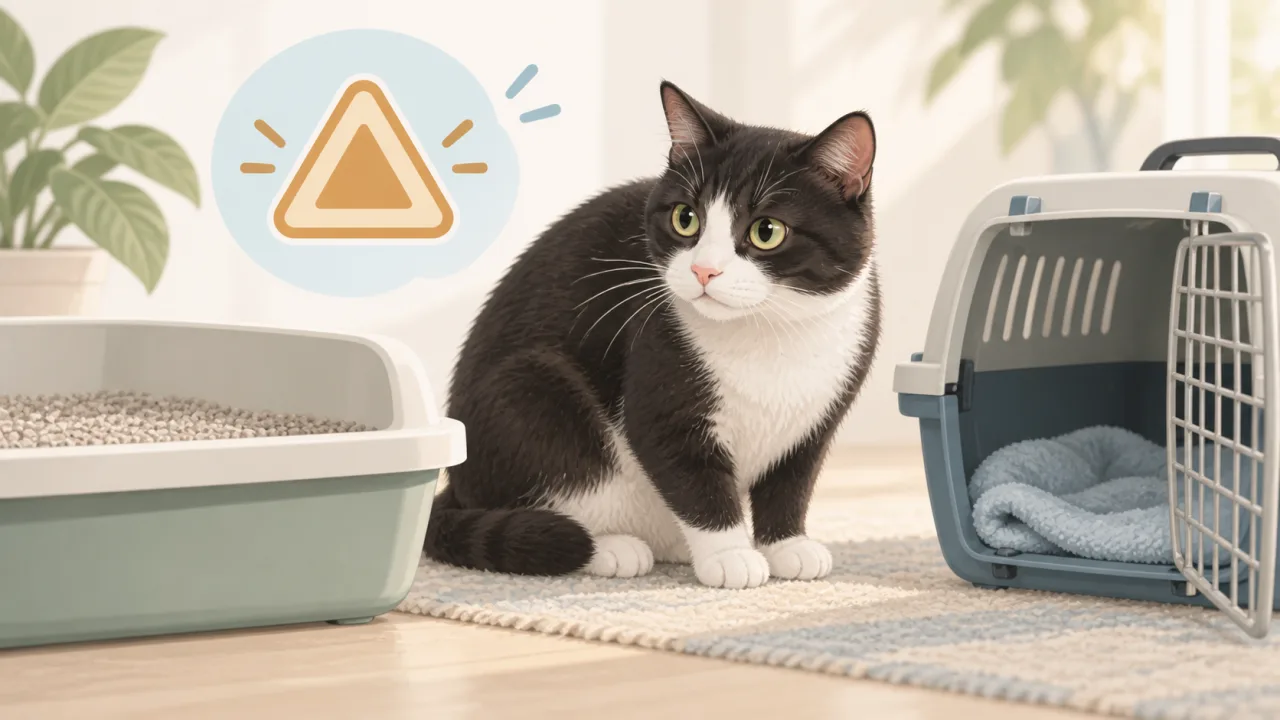
This chapter is not something to finish before leaving. If your cat is repeatedly straining without passing urine, call an emergency clinic while preparing to travel. Say “My cat is not passing urine” before offering a suspected diagnosis.
1. A blockage can affect the whole body
Stones are not the only cause. Urethral plugs can contain inflammatory material, mucus and crystals.[1,3] An earlier scan without stones does not rule out a new obstruction.
Urinary obstruction can cause dangerous potassium disturbances, including effects on the heart.[2] Do not use an online time estimate as permission to wait.
2. Prepare for care
- Report sex, last confirmed normal urination, drops or no output, vomiting and lethargy. An uncertain time is still useful information.
- Use a carrier and travel calmly. Existing notes are enough; do not delay for photographs.
- Do not squeeze the abdomen to express urine. Manual bladder expression risks pain and injury.[4]
- Do not wait for extra water or supplements to solve the problem. Ask the clinic about anything you intend to give.
3. Hospital treatment
The team assesses obstruction and general condition, provides pain relief and stabilisation as needed, and restores urine flow. Catheter treatment usually requires sedation or anaesthesia. Hospital monitoring may follow.[1]
4. Your discharge handover
Ask the team to complete this CatLab checklist:
- What urination should we expect at home?
- Which changes mean an immediate return?
- What does each medicine do, and whom do we call if it cannot be given?
- When is the recheck, and what is the overnight contact?
- Does the diet need changing, and how?
Renewed straining without urine requires immediate assessment, not waiting for the scheduled recheck.
5. If surgery is discussed
Perineal urethrostomy widens the urinary outlet in selected cases. It does not eliminate bladder inflammation or stone formation.[1] Ask why it is advised for this cat, what care remains necessary, and what complications are possible.
References and editorial note
- American College of Veterinary Surgeons, Urinary Obstruction in Male Cats
- Merck Veterinary Manual, Disorders of Potassium Metabolism in Cats
- Minnesota Urolith Center, Feline urethral plugs
- Taylor et al. (2025), iCatCare lower urinary tract diseases consensus guidelines
Evidence checked: 6 September 2026. CatLab educational synthesis; not an individual diagnosis or a claim of veterinary review. Decisions about tests and treatment belong with your own vet.