Cystitis that returns — what comes after “reduce stress”
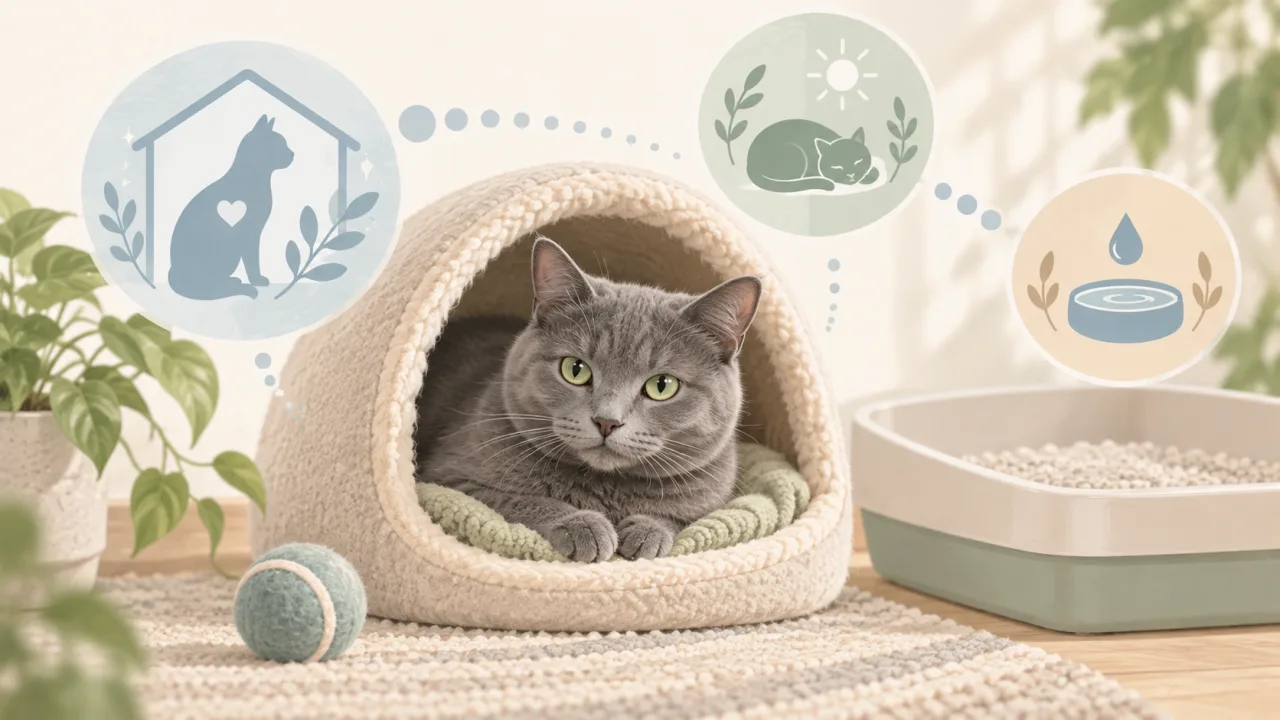
“Reduce stress” can feel like an impossible instruction. Your home seems quiet and your cat sleeps much of the day. This chapter turns that instruction into things you can observe.
1. FIC is not a casual label
FIC is understood as a complex disorder involving systems beyond the bladder, including stress responses.[1] It is painful, not imaginary. Other causes need assessment, and a previous diagnosis should not automatically explain a new episode.[5]
2. Follow the cat’s route through the home
Environmental needs include safe resting places, separated resources, play opportunities, predictable interaction and respect for familiar scent.[3] Ask:
- Can each cat enter and leave a litter box without being blocked?
- Does one cat wait at a distance while another controls food or water?
- Can a resting cat choose not to interact?
- Are litter, food and furniture all changing at once?
This is a search for manageable changes, not someone to blame. Cats in the same home may experience it differently.
3. Medical care and environmental change belong together
Discuss pain management and review daily resources. MEMO combines environmental adjustments. A study of 46 cats reported fewer signs after this approach, but it was observational without a control group. It cannot establish that one product works or predict an individual cat’s outcome.[2]
FIC is not automatically an indication for antibiotics. Ask whether bacterial infection has been identified.[4]
4. Improvement does not identify its cause
Symptoms can settle and recur.[5] If medicines, food, supplements and the home all change together, attributing improvement to one item is difficult.
CatLab suggests a shared timeline of symptoms, confirmed urination, prescriptions, food changes and household events. This supports discussion; it does not replace treatment or establish cause.
5. One task this week
Map the locations of food, water, litter boxes and resting areas. Observe access and choose one practical improvement. New urinary symptoms still need veterinary assessment.
References and editorial note
- Buffington (2011), Idiopathic Cystitis in Domestic Cats—Beyond the Lower Urinary Tract
- Buffington et al. (2006), Clinical evaluation of multimodal environmental modification (MEMO)
- FelineVMA (2025), Indoor cats position statement
- International Cat Care (2025), Cat carer guide to lower urinary tract diseases
- Taylor et al. (2025), iCatCare lower urinary tract diseases consensus guidelines
Evidence checked: 6 September 2026. CatLab educational synthesis; not an individual diagnosis or a claim of veterinary review. Decisions about tests and treatment belong with your own vet.