Repeated trips to the litter box — what cystitis does and does not mean
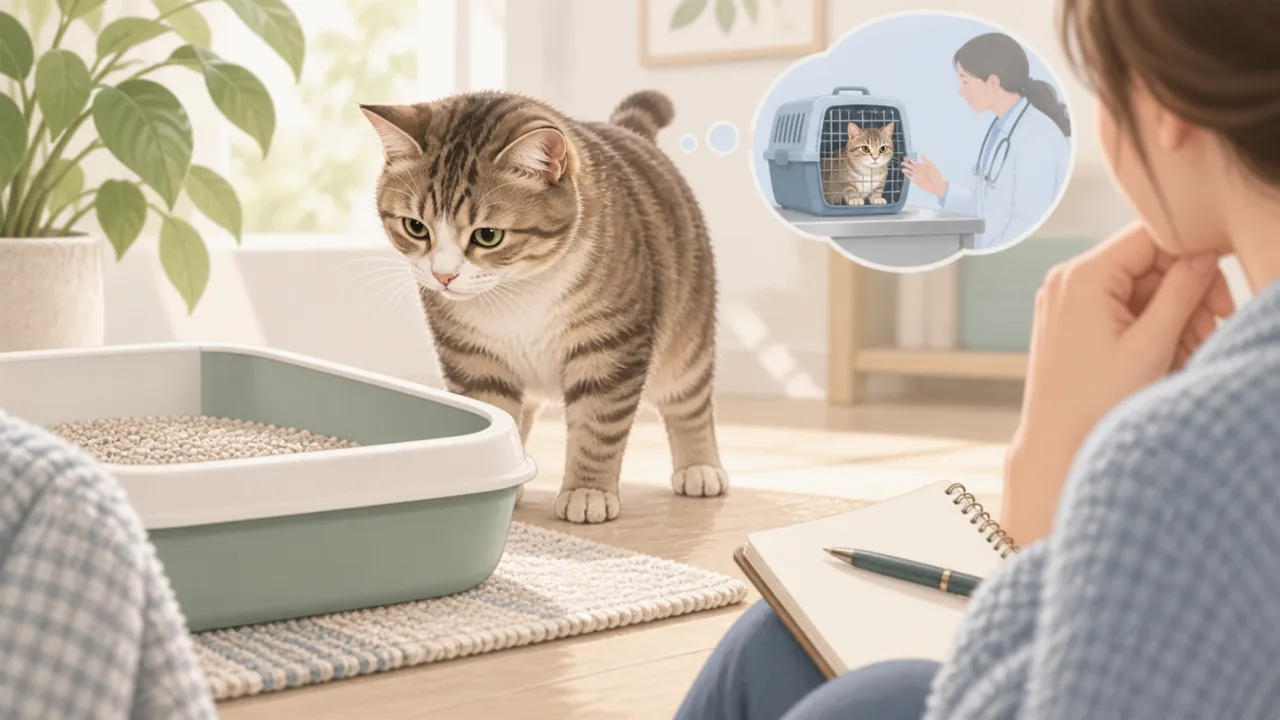
A cat walks into the litter box, leaves, and returns again. You notice tiny clumps or a red mark. “Cystitis” may be the first word you search for. It is a useful starting point, but it does not identify the cause.
1. Understanding the names
The lower urinary tract consists of the bladder and urethra. Lower urinary tract diseases include several different disorders. Feline idiopathic cystitis (FIC), stones and infection require different assessments. Obstruction describes a dangerous failure of urine outflow; it is not a synonym for all cystitis.[1,3]
2. Visits are not the same as urinations
Straining, frequent attempts, crying, blood in urine, urinating outside the box and repeated genital licking warrant veterinary attention.[1] An automatic box can count entries without proving that urine was passed.
Record what you actually saw: “Ten visits, urine seen twice, smaller than usual.” If you could not tell, write “unknown.” In a multi-cat household, do not assign a clump to a cat without evidence.
3. Each test answers a different question
Examination assesses possible obstruction, pain and general condition. Urinalysis provides clues such as concentration, blood and crystals. Culture investigates suspected bacterial infection. Imaging can identify stones or structural changes, while blood tests assess systemic effects and other illness. The combination depends on the patient and history.[2]
Ask: “What have we identified, what have we ruled out, and what remains uncertain?”
4. A short handover for your vet
- When signs began and when normal urination was last directly seen.
- Attempts versus confirmed output; pain, vomiting and appetite changes.
- Previous obstruction or stones, medication and current food.
- Recent household, litter box or diet changes.
These notes help communicate; they are not a home diagnostic score. If output is uncertain during repeated straining, getting veterinary help comes first.
5. Choose your next chapter
Start with the obstruction chapter for urgent symptoms, the FIC chapter after that diagnosis, or the stones chapter if imaging has identified a stone.
References and editorial note
- Cornell Feline Health Center, Feline Lower Urinary Tract Disease
- Merck Veterinary Manual, Detecting Disorders of the Kidneys and Urinary Tract of Cats
- Taylor et al. (2025), iCatCare lower urinary tract diseases consensus guidelines
Evidence checked: 6 September 2026. CatLab educational synthesis; not an individual diagnosis or a claim of veterinary review. Decisions about tests and treatment belong with your own vet.