Cystitis is not an antibiotic prescription — the missing diagnostic step
Urgent urinary signs
Repeated straining with little or no urine may be an emergency. Contact a vet immediately; do not wait to finish a diary or try a food or supplement. Do not squeeze the bladder at home.
It is understandable to want the medicine that seemed to work last time. Yet cystitis describes a problem in the bladder, not proof that bacteria caused it. This chapter is about using antibiotics for a clear reason, not refusing them when they are needed.
1. Blood does not identify the cause
Bacterial infection is relatively uncommon in healthy adult cats; age, kidney disease and diabetes are among relevant risk factors.[1] None of these creates an automatic prescription. In your record, add a diagnostic-status field: infection confirmed, suspected, or other causes under investigation. This prevents an old label silently becoming a new diagnosis.
2. What are we waiting to learn?
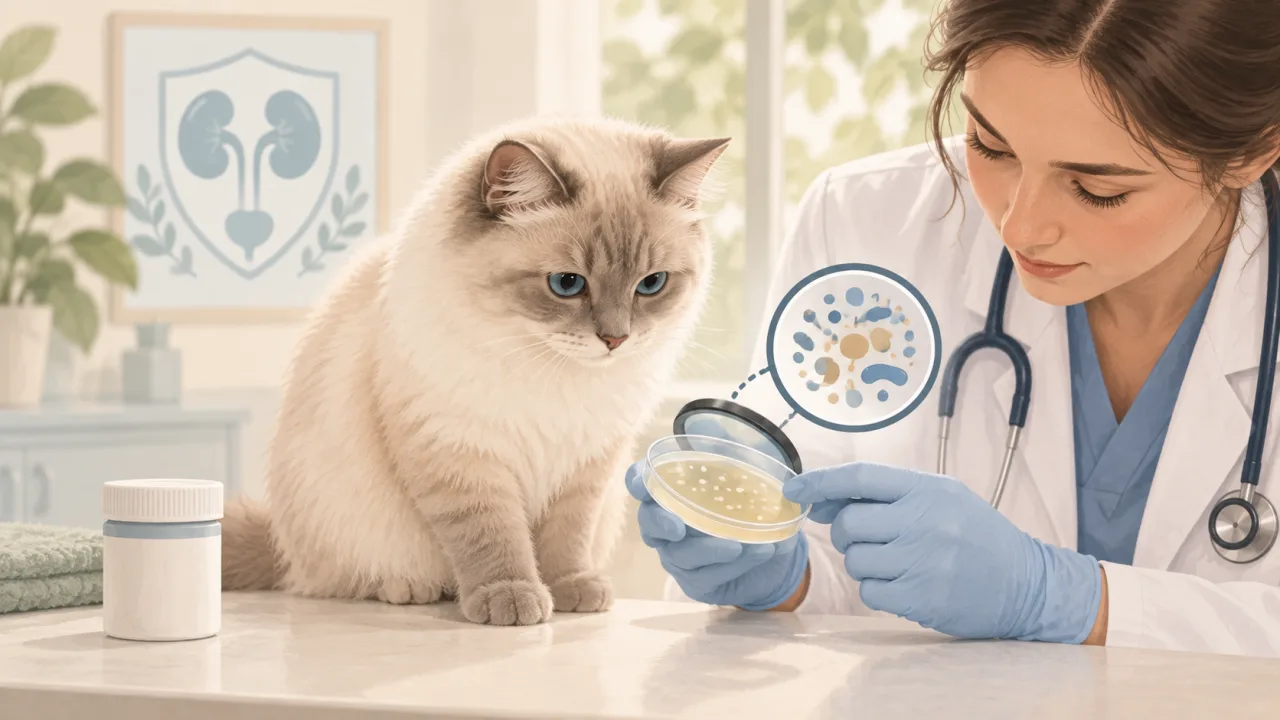
Urinalysis and culture help evaluate infection.[1] Collection method, symptoms and other findings matter when interpreting growth and susceptibility.[2] Ask both which organism grew and whether the team believes it explains this episode. Agree how results will reach you and whom to call if the cat worsens before they arrive. Do not select an antibiotic from the laboratory sheet yourself.
3. A positive result may not mean treatment
Subclinical bacteriuria means bacteria are present without relevant clinical signs. Antibiotics are generally not recommended for this finding alone; exceptions require clinical assessment.[2] Describe the limits of your observation rather than assuming no symptoms: “I watched one normal urination, but was away overnight.” Report systemic illness promptly. Observation is a plan, not abandonment.
4. Record the whole prescription
CatLab suggests six fields: medicine, prescribed amount, interval, start date, review date and contact instructions for a missed or vomited dose. Copy amounts from the prescription. Do not independently repeat a dose, stop because the urine looks better, or prolong treatment with leftovers. Follow a revised plan if the clinic changes treatment after reviewing results. This chapter deliberately offers no universal antibiotic or course length.
5. Bring a timeline, not just a drug name
Recurrent infection warrants consideration of underlying problems.[1] Keep previous cultures, prescriptions and symptom dates together. Recurrent urinary signs do not necessarily have the same cause.[3]
Ask whether the earlier infection persisted, a new infection developed, or this episode might have a different explanation. An answer may have to wait for testing. A useful diary supports that decision; it is not a competition to obtain the strongest medicine.
References and editorial note
- Merck Veterinary Manual — Infectious Diseases of the Urinary System of Cats
- Urinary tract infection and subclinical bacteriuria in cats: A clinical update (2019)
- 2025 iCatCare consensus guidelines on feline lower urinary tract diseases
Evidence checked: 12 September 2026. CatLab educational synthesis, not individual diagnosis or a claim of veterinary manuscript review. Agree tests and treatment with your veterinarian.