Remission — on the possibility that this disease can retreat
The other books in this series placed Farewell in this chapter — for kidney and heart disease, the heaviest thing worth reading early was the goodbye. Diabetes alone is different: the most important thing to know early in this disease is hope, and that hope has an expiry window.
Remission. Normal blood sugar without insulin — the daily injections ending, the cat going back to being just a cat. This article covers why it is possible, the odds, the road there, and — just as important — why it is all right if it never comes.
1. What remission precisely is — and why it is not a cure
The veterinary definition is clean: normal blood glucose maintained for more than 4 weeks without insulin or oral glucose-lowering drugs. The injections disappear, the thirst disappears, and outwardly the cat returns to the days before the disease.
Why not call it a cure? A pancreas that has been through diabetes carries a permanently reduced insulin reserve — put it under strain again (regained weight, steroids, another illness) and the disease can wake. The precise state is "a cat whose diabetes is asleep" — which is why a few rules remain after remission (section 5). Rules that are trivial compared with syringes.
2. Why it is possible — the fog called glucotoxicity
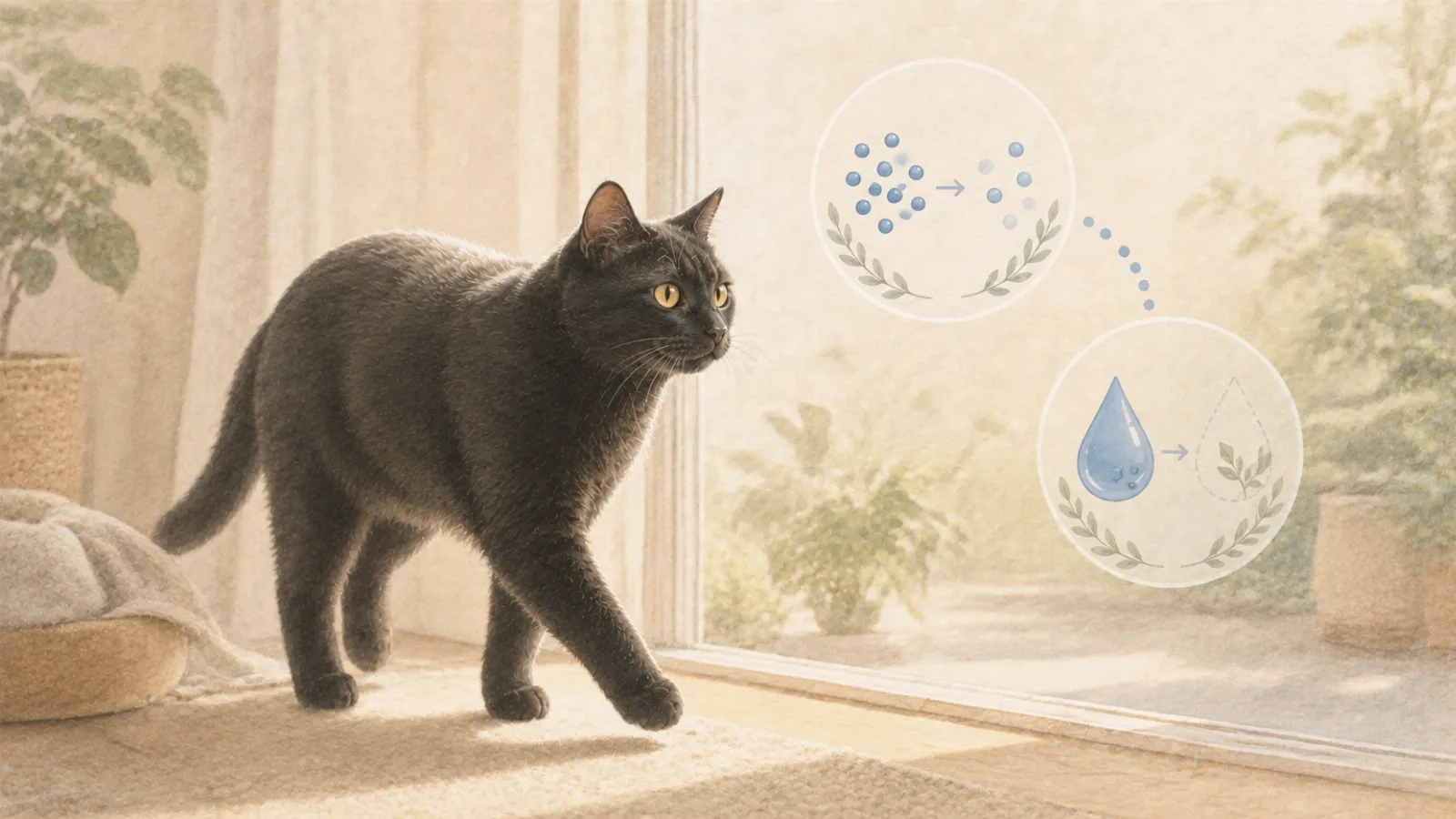
The secret of feline diabetes' reversibility is glucotoxicity.
High blood sugar paralyses the very beta cells that make insulin. The cells are not all dead — they are fainted inside a fog: unable to work, so glucose climbs further, and the deeper fog deepens the faint. Here is treatment's trick: lift the fog for weeks to months — insulin injections plus a low-carb diet — and the fainted cells wake and return to work. When the cat's own insulin comes back, the syringe becomes unnecessary.
This is also why "early" matters so much — cells left in the fog too long go from fainted to genuinely dead, and dead cells do not return. The golden window is not a metaphor; it is cell biology.
3. The odds — expectations in numbers
| Condition | Reported remission |
|---|---|
| Ordinary practice, standard management | Reports around one cat in four |
| Newly diagnosed on glargine (comparative study) | Glargine significantly above PZI and lente |
| Early + glargine + low-carb + tight home monitoring | 64% — and up to 84% when started within 6 months of diagnosis |
| When it happens | Mostly within 6 months — about a quarter within 2–3 months |
- What raises the odds — ① early start (fast control after diagnosis — the strongest predictor) ② low-carb wet food (high-protein wet food also boosts GLP-1, a hormone that nurtures beta cells) ③ tight home monitoring (it lets control be firm safely) ④ steroid-induced diabetes (a removable cause)
- What lowers them — long-undiagnosed disease, neuropathy already present (a marker of chronicity), hidden drivers like acromegaly (control itself fails — chapter 09), and a first six months spent loosely controlled
4. The road to remission — how it actually unfolds
- Lay the base — insulin promptly after diagnosis (glargine-class where possible) + the low-carb switch + home monitoring in place. The previous three chapters were all preparation for this
- The signal arrives — weeks to months in, the same dose starts producing lower and lower numbers. Nadirs sink; pre-injection values sink — the beta cells are waking and adding their own insulin
- The tapering stretch — the vet steps the dose down along the signal. This is the journey's hypoglycemia-risk zone — the cat's own insulin now overlaps the injected kind, and the pre-injection spot check matters most right here
- The trial off insulin — if the minimum dose still holds the normal range, insulin is paused under veterinary direction while glucose is watched (the stretch where a Libre shines)
- The verdict — normal glucose held 4+ weeks without insulin: remission
5. Life after remission — the rules of living with a sleeping disease
- Low-carb is forever — return the old diet and the disease may return with it. Happily, low-carb wet food is not "patient food"; it is simply good cat food
- Weight is the top watch item — regained obesity is the surest road back
- Keep occasional measurements — periodic glucose spots (say weekly) or scheduled fructosamine catch an awakening early; returning thirst and urine are the same signal
- Steroids: lifelong caution — whenever another condition calls for steroids, "this cat has a diabetes-remission history" is the first sentence. They are the classic relapse trigger
- If it relapses? — not rare (reports around one in four). But relapse is not a return to square one: an already-trained caregiver catches it early, control returns — and a second remission is possible
6. If remission never comes — the more important half of this chapter
Honestly: in ordinary practice, more cats do not remit than do. The start was late, the pancreatic damage ran deep, a hidden comorbidity interfered — it can fail to come even with a flawless caregiver.
So here is this chapter's real message. Remission is a bonus stage, not a pass mark. A cat well controlled on insulin lives for years, symptom-free, with a good life — that is this disease's baseline success, and remission is a gift occasionally laid on top. Chasing the gift into hypoglycemic gambles, into self-blame, into measurement obsession — that is trading the principal for the bonus.
7. What to ask your vet
- "Is my cat a realistic remission candidate (by timing, pancreatic state, comorbidities)?"
- "To raise the odds, is there anything to change in the current combination (insulin type, diet, monitoring)?"
- "Which signals would start a taper — and how does the measuring change then?"
- "(After remission) what do we check, and how often, to catch a relapse early?"
- "(If another disease needs treatment later) are there alternatives to steroids for this cat?"
8. Related
- The big picture of treatment — why insulin + low-carb is the road the remission evidence paved
- Measuring glucose at home — the craft that makes tapering and the off-insulin trial safe
- Reading the numbers — the referees of the remission verdict
- The Diabetes Bible — contents — chapter 05, Feeding, is the next key