B1과 B2 사이 — 좌심방이 말해주는 것
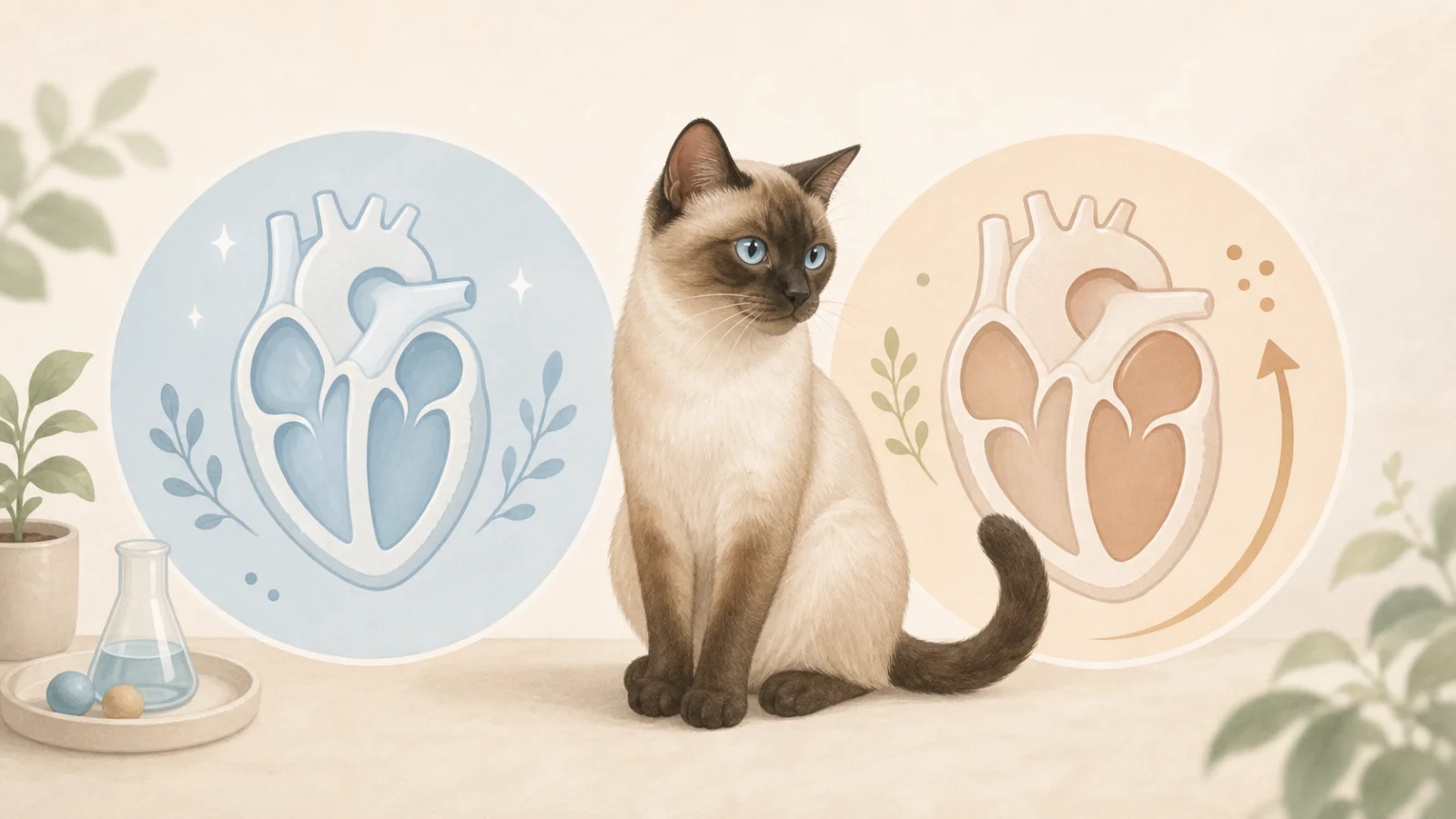
HCM 진료실에서 가장 자주 오가는 말은 사실 병명이 아니라 알파벳과 숫자 하나입니다. "아직 B1이에요." 또는 "이제 B2로 봐야겠습니다." 같은 무증상인데 왜 어떤 아이는 B1이고 어떤 아이는 B2일까요. 그리고 그 한 글자가 바뀌는 순간, 무엇이 달라져야 할까요.
이 글은 HCM 병기의 한가운데 — 겉으로는 똑같이 멀쩡해 보이는 두 무증상 단계의 갈림길을 다룹니다. 결론부터 말하면, 그 갈림길에 서 있는 것은 심장 벽이 아니라 좌심방입니다.
1. 병기 지도에서 B의 위치
ACVIM 병기(2020)를 한 줄로 다시 놓으면 — A(소인만 있음) → B1·B2(병은 있고 증상은 없음) → C(심부전·혈전을 겪음) → D(치료 불응)입니다. 대부분의 HCM 고양이는 일생의 대부분을 B에서 보냅니다. 그래서 B 안에서의 위치가 이 병 관리의 거의 전부이고, ACVIM이 B를 굳이 둘로 쪼갠 이유이기도 합니다: 같은 '무증상'이라도 임박한 위험이 전혀 다르기 때문입니다.
2. 왜 좌심방인가 — 위험이 고이는 저수지
비유 하나로 정리됩니다. 두꺼워진 좌심실은 뻣뻣해진 펌프입니다. 펌프가 덜 받아들이면, 그 앞 칸 — 좌심방 — 에 피가 고입니다. 좌심방은 이 병의 저수지입니다.
- 저수지가 아직 정상 크기라면 → 펌프가 뻣뻣해도 상류가 버티고 있다는 뜻 → B1
- 저수지가 불어나기 시작했다면 → 압력이 상류로 밀려 올라오고 있다는 뜻 → B2
- 저수지가 넘치면 → 폐로 물이 참(심부전) → C
- 고인 물이 굳으면 → 혈전(ATE)
즉 좌심방 크기는 "지금까지 심장이 받아 온 부담의 누적 성적표"입니다. 벽 두께가 병의 존재를 말한다면, 좌심방은 병의 진행을 말합니다. 그래서 재검 결과지에서 벽 두께보다 LA/Ao의 방향이 더 중요한 뉴스입니다 (결과지 읽는 법).
3. B1 — 감시 등급이지, 시한부가 아닙니다
B1의 데이터는 이 바이블에서 가장 위로가 되는 숫자들입니다.
- 무증상으로 진단된 HCM 고양이의 중앙 생존은 10.9년 — 많은 아이가 심장이 아닌 다른 이유로 노령까지 삽니다 (Payne 2013)
- 보호소 고양이를 중앙 5.6년 추적한 자연 경과 연구(CatScan II)에서 HCM 고양이의 79%는 추적 기간 내 심혈관 사건 없이 지냈습니다
- B1에서 예후를 바꾼다고 입증된 약은 아직 없습니다 — "약 없이 지켜보자"가 표준 진료입니다 (ACVIM 2020)
B1의 케어는 세 줄이면 됩니다: 6~12개월마다 심초음파 재검, 주 2~3회 안정 시 호흡수, 마취·수액 때 심장 고지. 그 외의 일상 — 놀이, 사료, 외출 습관 — 은 바꾸지 않아도 됩니다. B1은 병명이라기보다 감시 등급에 가깝습니다.
4. B2 — 좌심방이 말하기 시작했다
B2의 기준은 좌심방이 중등도 이상으로 확대된 것입니다(단면 LA/Ao로 대략 1.9 이상 수준). 여기에 ACVIM은 좌심방 크기 외에도 위험을 끌어올리는 보조 소견들을 함께 봅니다:
| 보조 위험 소견 | 왜 위험 신호인가 |
|---|---|
| 갤럽음(청진에서 말발굽 소리) | 뻣뻣한 심실에 피가 부딪히는 소리 — 이완 장애가 상당하다는 뜻 |
| 부정맥 | 심근 손상 부위가 전기 신호를 흐트러뜨림 — 급사 위험과 연결 |
| 좌심방 기능 저하(LA-FS 감소) | 저수지가 커지기만 한 게 아니라 수축력을 잃는 중 — CatScan II에서 진행의 선행 신호였음 |
| 극단적 비대(벽 9mm 이상) | 심근 산소 수요·허혈·급사와 연관된 예후 인자 |
| 수축 기능 저하 · 국소 벽운동 이상 | 병이 '두꺼워지는 단계'를 지나 '지치는 단계'로 |
| 스모크(SEC)·혈전 | 혈전 전조 그 자체 — 보이면 B2 중에서도 최고 경계 |
위험의 크기는 연구 숫자로 이렇습니다. 무증상 HCM 고양이 대규모 추적(REVEAL, 1,730마리)에서 5년 내 심부전 또는 혈전을 겪을 위험은 약 4~5마리 중 1마리였고, 좌심방 크기가 그 위험의 대표 예측 인자였습니다. B1과 B2를 가른 채로 보면 그 위험의 대부분이 B2 쪽에 몰려 있습니다.
5. B2가 되는 순간 바뀌는 세 가지
- ① 클로피도그렐 시작 논의 — 고인 피가 굳는 것을 막는 항혈소판제. 혈전을 겪은 고양이의 재발 예방에서 아스피린보다 우월함이 입증됐고(FAT CAT 시험), ACVIM은 혈전 위험이 올라간 B2부터 예방적 투여를 권합니다. 하루 1/4~반 알, 대개 평생. 쓴맛 때문에 캡슐·필포켓 요령이 필요합니다
- ② 재검 간격 단축 — 6~12개월 → 3~6개월. 좌심방의 방향을 놓치지 않기 위해서입니다. NLR·PNR 같은 혈액 지표도 이때부터 같이 챙길 가치가 커집니다
- ③ 호흡수는 매일 — 주 2~3회에서 매일 1회로. B2에서 C로 넘어가는 가장 이른 신호가 안정 시 호흡수의 상승이기 때문입니다
6. 경계선 위의 아이 — 1.6과 1.9 사이라면
현실의 결과지는 교과서처럼 깔끔하지 않습니다. LA/Ao 1.7 — B1인가 B2인가? 이 회색지대에서 기억할 것:
- 숫자 하나로 병기를 확정하지 않습니다 — 측정은 각도·측정자에 따라 0.1~0.2쯤 흔들립니다. 방향이 두 번 연속 같을 때 추세로 읽습니다
- 재는 방법이 같았는지부터 — 2D와 M-mode 값은 호환되지 않습니다 (02장)
- 보조 소견이 심판 — 같은 1.7이라도 갤럽음·부정맥·좌심방 기능 저하가 있으면 B2 쪽으로, 아무것도 없으면 B1 쪽으로 기울여 읽는 게 ACVIM의 정신입니다
- 회색지대의 처방은 대개 "3~4개월 뒤 한 번 더" — 이건 수의사가 신중하다는 뜻이지, 몰라서가 아닙니다
7. B에서 C로 — 이 감시의 목적지
B2 관리의 목표를 한 문장으로 쓰면 이렇습니다: C(심부전·혈전)로 넘어가는 순간을 최대한 늦추고, 넘어가더라도 응급실이 아니라 외래에서 잡는 것. 그래서 넘어가는 신호를 외워 둡니다 — 안정 시 호흡수의 계단식 상승(가장 이르고 가장 흔함), 갑작스런 뒷다리 마비+비명(혈전), 개구호흡·실신. 앞의 것은 매일 1분의 측정이 잡아 주고, 뒤의 둘은 즉시 병원입니다.
그리고 만에 하나 C를 겪게 되더라도 — 치료로 안정돼 집으로 돌아와 지내는 고양이가 많습니다. 그 이야기(심부전과 혈전의 실전)는 06·07장에서 이어집니다.
8. 병원에 이렇게 물어보세요
- "우리 아이 LA/Ao가 정확히 얼마였나요? B1과 B2 중 어느 쪽으로 보시나요?"
- "좌심방 크기 말고 갤럽음·부정맥·좌심방 기능·스모크 중 걸리는 소견이 있었나요?"
- "(B2라면) 클로피도그렐을 시작하나요? 용량과 먹이는 요령은요?"
- "(경계라면) 몇 달 뒤에 다시 볼까요? 그 사이 집에서 뭘 보면 될까요?"
- "우리 아이가 C로 넘어가는 신호 중 특별히 조심할 것은 무엇인가요?"
9. 함께 보면 좋은 것
- 심초음파 결과지 읽는 법 — LA/Ao를 결과지에서 찾는 법과 함정
- 안정 시 호흡수 — B2의 매일 1분
- NLR과 PNR — B2부터 가치가 커지는 혈액 지표
- 진단받은 날 — 병기 전체 지도