When another disease comes too — when control fails, suspect a cause, not the dose
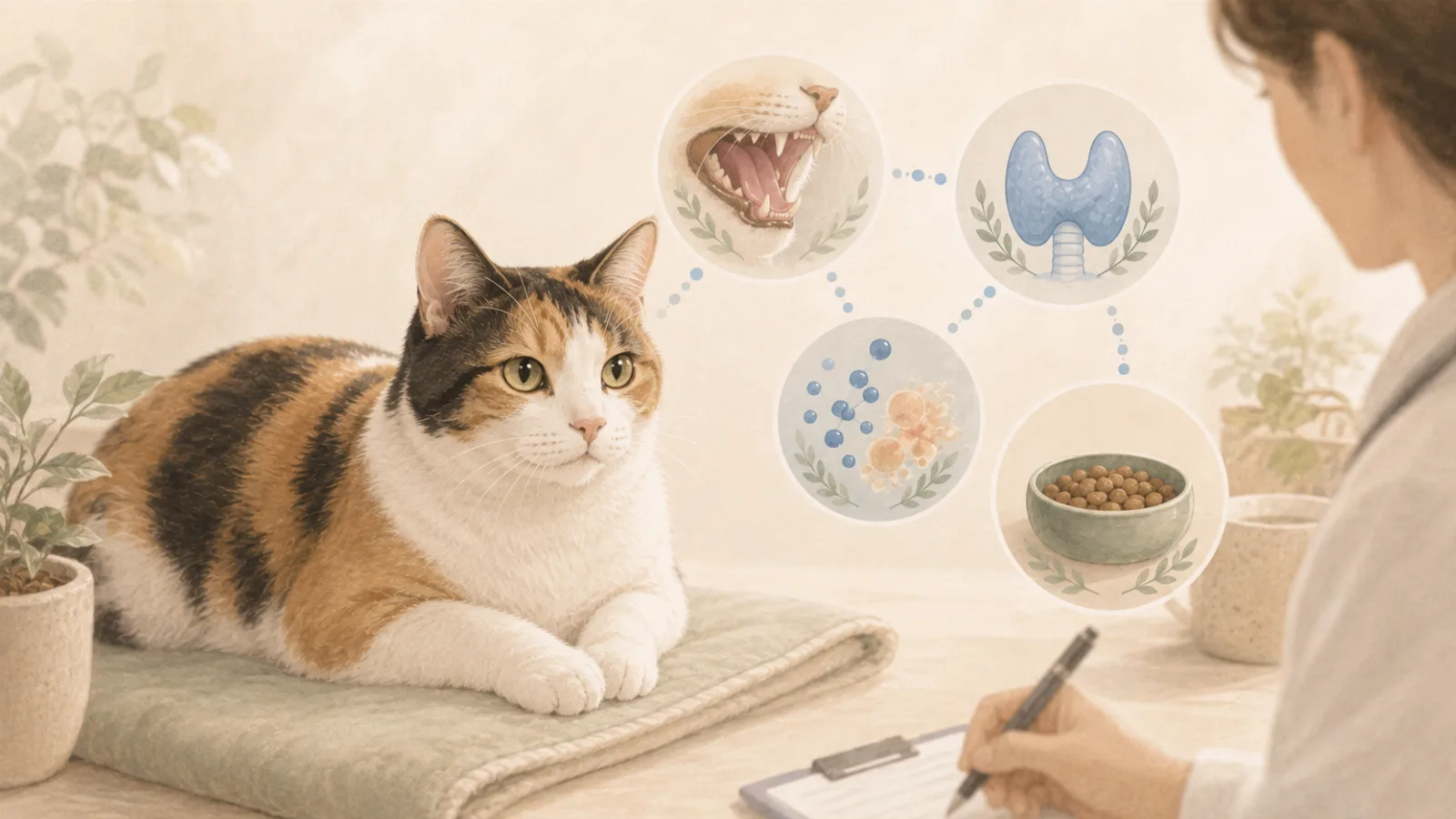
When the insulin keeps rising and the glucose still will not settle, caregivers start doubting themselves — was the injection wrong, is it the food? Veterinary internal medicine attaches a different principle to this situation: "uncontrolled diabetes is a hidden-cause problem before it is a dose problem."
And feline diabetes has a flagship hidden cause — a disease carried, astonishingly, by one in four diabetic cats, while remaining almost invisible from the outside. This article maps the comorbidities of diabetes, with that disease (acromegaly) in the lead role.
1. The principle — hunting the culprit of insulin resistance
Insulin that "doesn't work" is rarely the insulin's fault. Hormones and inflammation from another disease are blocking its work. Hence this chapter's single grammar: when the dose climbs past the expected range, stop climbing and start searching. The standard sequence is "substantial weight-based dosing without control → resistance workup" — and the search list is the rest of this article.
2. Acromegaly — the hidden culprit in one of four
The lead role. Hypersomatotropism (acromegaly) is a small pituitary tumour over-secreting growth hormone — and growth hormone is insulin's head-on antagonist. While it operates, insulin is water poured into a cracked jar.
- How common — 24.8% in a large UK survey of diabetic cats, 16% in Australia, 15–25% by region. Roughly one diabetic cat in four — not a rarity but diabetes' hidden half
- Why it gets missed — despite the name, the facial changes (broad head, wide face, big paws) come late and vaguely. As the study title says: beware the imposter — clinical appearance cannot separate it from ordinary diabetes; a blood test is essential
- The suspicion signals — ① ever-climbing doses without control (the classic) ② weight gain in a diabetic (diabetics usually lose — growth hormone builds the body) ③ persistently ravenous appetite ④ new snoring (soft-tissue growth)
- The test — a single IGF-1 blood test screens for it: above 1,000 ng/mL, the positive predictive value is about 95%. One draw catches the one-in-four culprit; confirmation is by brain imaging (CT/MRI)
- The treatment spectrum — the definitive fix is pituitary surgery: in a specialist series, 22 of 24 operated cats reached diabetic remission. Capable centres are few worldwide. Alternatives: radiation, medication (cabergoline and kin), and growing reports that SGLT2 drugs help manage the signs where surgery is out of reach. How far to go is decided with age, condition and reality — and merely knowing the diagnosis ends the pouring of insulin into the cracked jar
3. Pancreatitis — chicken, egg, and trigger
- Each causes the other — pancreatitis injures the insulin-producing tissue and creates diabetes; diabetics in turn frequently carry quiet chronic pancreatitis
- The flare is the danger — an acute flare collapses appetite and inflames insulin resistance, making it a classic trigger of control collapse and DKA (chapter 08's high-risk situation). Vomiting + appetite loss + hunching → add the pancreatitis test (fPL)
- Daily management — a confirmed case may need fat adjustment inside the low-carb rule (feeding chapter, section 7) — the product shortlist narrows; choose with your vet
4. Kidney disease — the one comorbidity watched in reverse
Other comorbidities make insulin work less; kidney disease does the opposite — insulin is degraded and cleared by the kidneys, so as kidney function falls, insulin lingers and the requirement drops. In a diabetic with progressing CKD, yesterday's right dose can be today's overdose — the only combination where the danger is the low.
- Untangling shared signs — thirst and urine belong to both diseases. "Is the diabetes worse?" may have a kidney answer; read the control referee (fructosamine) and the kidney values together
- The diet collision — renal (higher-carb) versus diabetic (low-carb) is weighed in the feeding chapter, section 7: advanced CKD weights phosphorus, early CKD with poor control weights carbs
- Bundle the rechecks — kidneys, electrolytes and fructosamine in one draw is kinder to the cat and the wallet alike
5. Hyperthyroidism — the senior diabetic's common housemate
- It builds insulin resistance and its signs overlap diabetes' (weight loss, ravenous appetite) — why T4 joins IGF-1 on the senior workup list
- It distorts fructosamine — as the numbers chapter showed, it drags the value falsely low, painting "good control" that is not there
- Treating it reshuffles the board — once the thyroid is controlled, the insulin requirement shifts (usually downward). Thyroid titration periods call for denser glucose watching
6. Steroids and other drugs — able to create, able to wreck
- Steroids can create diabetes (the steroid-induced type — with good remission odds once withdrawn) and can wreck controlled diabetes. Long-acting injectable steroids are the worst offenders
- The declaration rule — at any consult for any reason, "this cat is a diabetic under treatment" comes first. If a steroid is truly needed, alternatives (topicals, non-steroidals) and a monitoring plan are agreed alongside
- Others — progestin-class hormones point the same way. Each new prescription deserves one sentence: "does this affect blood sugar?"
7. Infections — the price of a sweet body
High glucose sets a banquet for bacteria. Sugar-laced urine in particular breeds cystitis, so urinary infections are common in diabetics — sometimes silent (asymptomatic bacteriuria). Dental and skin infections follow the same logic — and every infection feeds back into insulin resistance, shaking control. A loop.
- Put urinalysis (with culture) and a mouth check on the poor-control search list — the third of the big three alongside IGF-1 and T4
- SGLT2 cats especially — the drug deliberately pours sugar into urine, so urinary surveillance matters more. Watch for litter-box changes (frequency, straining, blood)
8. What to ask your vet
- "(Poor control) before raising the dose again, which do we check first — IGF-1, T4, urine culture, fPL?"
- "(High IGF-1) which confirmation and treatment options are realistic for this cat's age and state?"
- "(With CKD) as kidney values rise, what signals that the insulin should come down?"
- "(At another clinic) a steroid is proposed — may we discuss alternatives or a monitoring plan?"
- "Can we bundle this cat's recheck panel (glycemic + kidney + thyroid + urine) into one visit?"
9. Related
- Managing the crises — how a comorbidity flare pulls the DKA trigger
- Feeding — the dietary balancing with kidneys and pancreas
- The CKD Bible: comorbidities · The HCM Bible: comorbidities — the same crossroads, mapped from other directions
- The Diabetes Bible — contents